Claude's Self-Hosted Sandboxes Just Went Live—Agents Can Now Run in Your Infrastructure
Anthropic just shipped self-hosted sandboxes for Claude Managed Agents. Translation: your agents can now run code and execute...
In this article

What Changed: Cloud vs. Self-Hosted
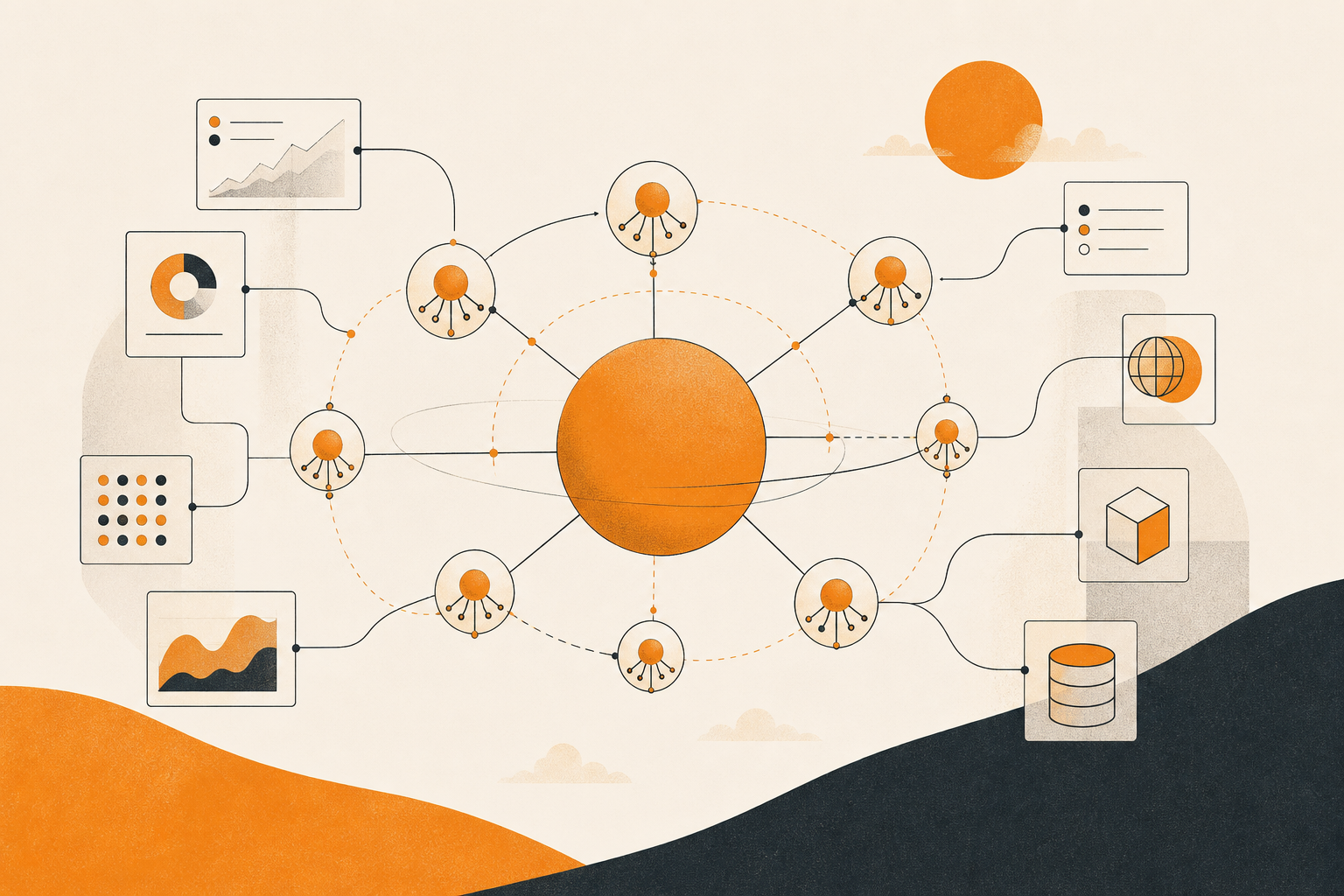
Until now, Managed Agents executed all tools and code in Anthropic-managed containers. Your agent logic stayed in Anthropic's control. With self-hosted sandboxes, the orchestration (how Claude thinks through a task) still runs on Anthropic's infrastructure, but tool execution moves to your own servers, your own containers, your own network.
This matters because sensitive data—healthcare records, financial data, proprietary code—can now stay inside your network boundary. Your security policies, audit logging, and network controls apply. No data escapes.
How It Works
You deploy an environment worker on your infrastructure (on-prem, or with managed sandbox providers like Cloudflare, Daytona, Modal, or Vercel). When a Managed Agent session starts, Anthropic enqueues it. Your worker claims it, spawns the execution context, downloads the agent's skills, runs tools locally, and posts results back.
- Orchestration stays on Anthropic's side (Claude's reasoning loop)
- Tool execution runs in your infrastructure (your code, your network)
- You control compute allocation—resource-heavy tasks get CPU/memory you provision
- Files and repositories don't leave your perimeter
- Network policies, proxies, and secrets injection are all yours
The Providers You Can Use
Anthropic has pre-built integrations with four sandbox platforms, each with different trade-offs:
- Cloudflare: MicroVMs and isolates at scale, zero-trust secrets injection, custom proxies for egress control
- Daytona: Full composable computers, long-running and stateful, SSH access, pause/restore with full state preserved
- Modal: Cloud platform for AI workloads, sub-second startup, GPUs on demand, integrates with Modal's functions and storage
- Vercel: VM security + VPC peering, millisecond startup, bring your own cloud
Real Use Cases (Live Now)
Amplitude is building Design Agent (internal tool for on-brand production UI) on Managed Agents + Cloudflare. Clay built Sculptor (GTM engineering agent) on Daytona. Rogo (AI platform for institutional finance) built an analyst agent on Vercel Sandbox to handle proprietary financial data securely. These aren't demos. These are production systems running today.
MCP Tunnels: Reaching Private Services
Self-hosted sandboxes control where code executes. MCP (Model Context Protocol) tunnels control how your agent reaches internal services. With tunnels, Claude can call MCP servers inside your private network without exposing them to the public internet—databases, private APIs, knowledge bases, ticketing systems all become tools your agent can invoke.
You deploy a lightweight gateway that makes a single outbound connection. No inbound firewall rules. No public endpoints. Traffic is encrypted end-to-end.
The Full Picture: Self-hosted sandboxes (where execution runs) + MCP tunnels (how execution reaches internal services) = your agents can operate entirely within your security perimeter while still using Claude's reasoning.
What This Means For You
If you're in healthcare, finance, or any regulated industry, this removes the "but my data can't leave the network" objection to Managed Agents. If you have custom internal APIs and workflows, your agents can now actually use them without you building custom proxy layers.
The practical implication: Claude agents stop being a consumer product and become a real enterprise infrastructure play.
Sources & Further Reading
Anthropic Claude Platform: Self-hosted sandboxes documentation | Releasebot: Claude Updates May 2026 | Anthropic Managed Agents overview
Get the Claude playbook in your inbox.
One weekly email for Claude and Claude Code users. Real workflows, no hype. Subscribe and we send you The Claude Power-User Cheatsheet.
— ¶ —

Luke Thompson
Luke Thompson is the founder of The Operations Guide, LLC and editor of The Claude Insider. Based in Jonesborough, Tennessee, he has spent years building AI-augmented business systems and automation workflows for operators and teams. He began working with large language models in production well before the current wave of consumer AI tools, integrating them into client workflows, content pipelines, and operational infrastructure. At The Claude Insider, he writes about Claude with the specificity of someone who uses it daily as a professional tool — not as a reviewer or commentator, but as a builder. His coverage focuses on what actually works: prompt patterns, API integration strategies, agentic workflows, and the real-world tradeoffs that practitioners face. He is not affiliated with Anthropic, PBC.
Articles are researched and drafted with AI assistance, reviewed and edited by Luke Thompson.
Know where AI can pay off in your company.
Take the free two-minute AI Readiness Assessment. See your score, the two gaps holding you back, and the next move worth making.