Claude Corps: Anthropic's $150M Fellowship embeds 1,000 AI Experts in Nonprofits
Anthropic's new $150 million fellowship, Claude Corps, will place 1,000 tech professionals in nonprofit and public sector organizations for one year to deploy AI solutions.
In this article
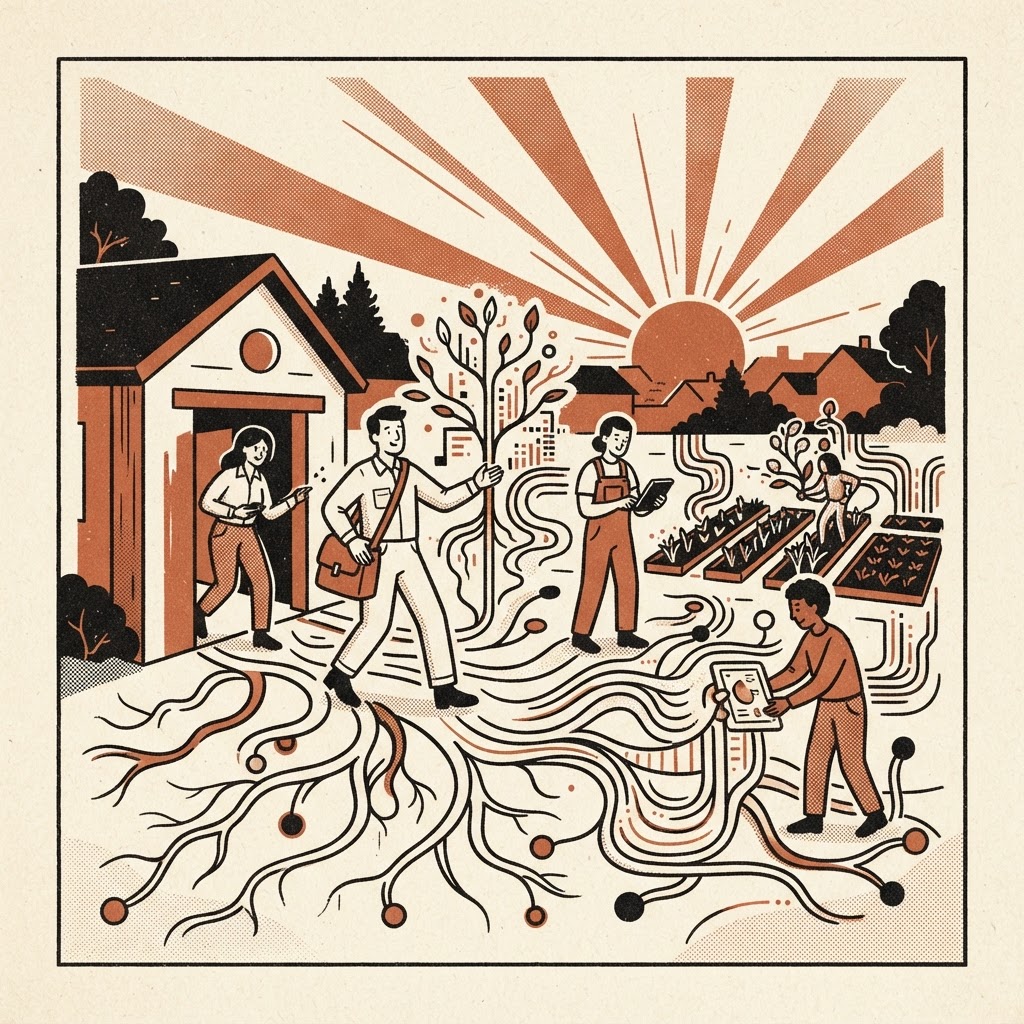
Bridging the AI Resource Gap for Nonprofits
While corporations have been quick to adopt AI tools like Claude to streamline workflows and analyze data, the public and nonprofit sectors often lack the technical expertise and financial resources to implement these technologies. Anthropic aims to close this divide by providing both funding and hands-on talent.
The $150 million program is one of the largest philanthropic commitments by an AI lab to date, positioning Anthropic as a key player in public-interest technology deployment.
A Three-Way Strategic Partnership
To execute this ambitious national initiative, Anthropic is partnering with two established organizations in education and finance:
- Anthropic: Providing the strategic vision, funding, and access to Claude models and engineering mentorship.
- CodePath: Recruiting, training, and employing the 1,000 fellows as employer of record, drawing from a diverse network of computer science students and early-career tech professionals.
- Social Finance: Overseeing the measurement, evaluation, and impact assessment of the AI solutions deployed across the cohort.
Who Can Apply: Eligibility and Compensation
Each fellowship pays $85,000 annually with full benefits. To qualify, applicants must be at least 18 years old, have fewer than two years of full-time work experience, be authorized to work in the United States, and be willing to relocate to their assigned host organization's location. The program is specifically designed for early-career professionals who bring fresh technical skills without the seniority that would disqualify them from a ground-level implementation role.
Cohort placement follows a phased rollout. The first cohort of 100 fellows begins in October 2026, and applications for that cohort close on July 17, 2026. Two additional cohorts follow, one starting in February 2027 and another in August 2027, with applications open on a rolling basis. Across those three cohorts, Anthropic will reach its full commitment of 1,000 placed fellows. Host organizations can also apply independently to request a fellow for their team.
What Fellows Will Build
The fellows will be embedded full-time for 12 months at participating nonprofits. Their goal is to build custom AI solutions tailored to each organization's mission. Examples of planned projects include:
- Custom Claude-powered Slack and Teams bots to automate internal knowledge bases.
- Data ingestion pipelines to clean and process community data for reporting.
- Self-service constituent support agents that help answer common public inquiries.
Where Fellows Are Deployed: The Nonprofit Network
The program's nonprofit roster spans food security, education, civic tech, and environmental work. Named host partners include Braven in Chicago, Code the Dream in Durham, Heartland Forward in Bentonville, the Montgomery County Food Bank in Conroe, Team Red White and Blue in Floyds Knobs, the Reef Environmental Education Foundation in Key Largo, SoundOff in San Antonio, StriveTogether in Cincinnati, and the YMCA of Greater Charlotte. Larger national organizations such as Code for America, RAINN, the International Rescue Committee, and Year Up United round out the network. In total, Anthropic says at least 400 nonprofits will host fellows over the next 12 months.
Operational Support and Mentorship Structure
To ensure the fellows can successfully execute their missions, Anthropic is establishing a dedicated engineering support structure. Fellows will receive specialized onboarding training developed by CodePath, focusing on API integration, prompt design, and safe retrieval-augmented generation (RAG) patterns. Anthropic's in-house engineering team will provide ongoing technical mentorship through office hours, helping fellows troubleshoot complex model behavior and optimize latency in production environments.
Evaluating Public Interest AI Outcomes
Measuring the success of generative AI in the public sector requires moving beyond simple compute metrics. Social Finance will design and implement a comprehensive impact evaluation framework. This framework will monitor qualitative and quantitative KPIs, such as hours of administrative work automated, constituent wait-time reductions, and the accuracy of localized search tools. By auditing these outcomes, the project aims to establish a repeatable playbook for public-interest AI deployments worldwide.
What Nonprofit Leaders Are Saying
Several host organization leaders have spoken publicly about what the program means for their day-to-day operations.
Jennifer Blatz, CEO of StriveTogether, said: "AI changes that equation. With our Claude Corps fellow, we'll be able to do analysis at a pace that was unimaginable."
Scott Burns, president of the Montgomery County Food Bank, framed the stakes plainly: "Hunger doesn't wait, and neither can innovation. Food banks need to solve problems as we are committed to the people we serve."
Amanda Renteria, CEO of Code for America, noted: "We're excited to welcome Claude Corps fellows who can share our passion for using responsible AI to solve public service challenges."
These are not ceremonial endorsements. Each organization is planning to put its fellow to work on active, mission-critical operations from their first week on site.
How it Relates to Anthropic's Ecosystem
This fellowship represents a significant expansion of Claude's footprint. It follows the recent launch of the Anthropic Partner Hub and Services Track designed for commercial enterprise scaling. Now, the public sector is getting a dedicated services track of its own.
Fellows will also build upon the programmatic credit model introduced with the Claude Agent SDK split. Managing nonprofit developer credits will be a critical part of their engineering tasks.
Sources & Further Reading
For more information on the Claude Corps fellowship and application details, consult the primary announcements:
- Anthropic Official Announcement: https://www.anthropic.com/news/claude-corps
- Associated Press Coverage: https://apnews.com/article/anthropic-claude-corps-nonprofit-ai-fellowship
Get the Claude playbook in your inbox.
One weekly email for Claude and Claude Code users. Real workflows, no hype. Subscribe and we send you The Claude Power-User Cheatsheet.
— ¶ —

Luke Thompson
Luke Thompson is the founder of The Operations Guide, LLC and editor of The Claude Insider. Based in Jonesborough, Tennessee, he has spent years building AI-augmented business systems and automation workflows for operators and teams. He began working with large language models in production well before the current wave of consumer AI tools, integrating them into client workflows, content pipelines, and operational infrastructure. At The Claude Insider, he writes about Claude with the specificity of someone who uses it daily as a professional tool — not as a reviewer or commentator, but as a builder. His coverage focuses on what actually works: prompt patterns, API integration strategies, agentic workflows, and the real-world tradeoffs that practitioners face. He is not affiliated with Anthropic, PBC.
Articles are researched and drafted with AI assistance, reviewed and edited by Luke Thompson.
Know where AI can pay off in your company.
Take the free two-minute AI Readiness Assessment. See your score, the two gaps holding you back, and the next move worth making.