Claude Science: Anthropic Launches Dedicated AI Workbench for Scientific Research
Anthropic has introduced Claude Science, a dedicated research environment integrating computational tools, 3D structure rendering, and scalable HPC compute.
In this article
An AI Workbench for Scientists
Scientific research is often tedious. Researchers must work across dozens of databases, each with their own schema, contend with file formats that require bespoke data pipelines and viewers, and transition between a roster of tools: PubMed, Jupyter, R, a cluster terminal, and more.
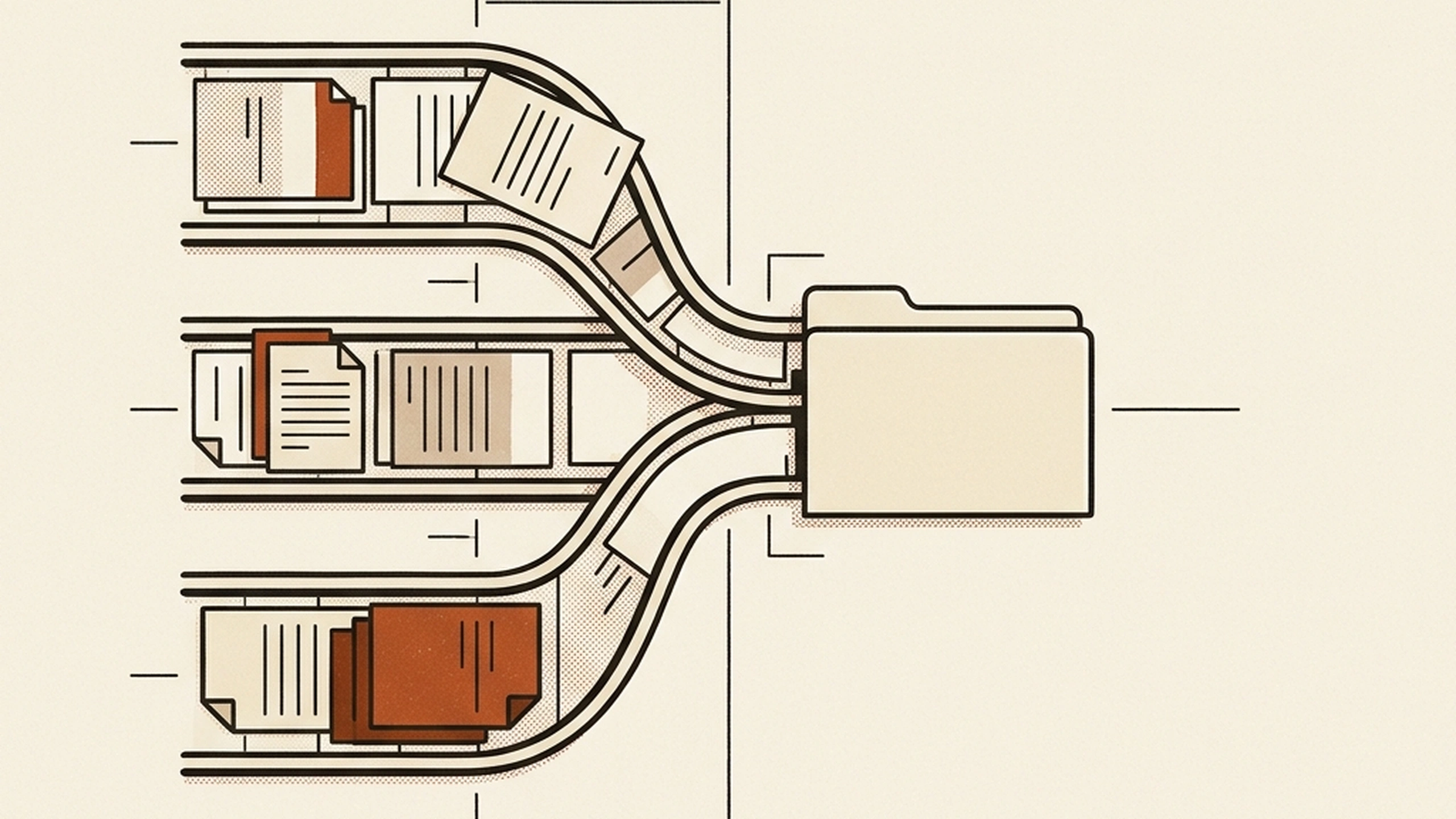
Claude Science brings these fragmented tools into a single research environment where scientists can conduct all stages of their work. It helps you analyze literature and execute multistep research, produces detailed artifacts, and lets you iteratively refine figures and manuscripts until they are ready for publication.
Every output carries an auditable history of how it was made, so you can validate and reproduce the results. Like a Jupyter Notebook, you can access Claude Science wherever you already work: locally on macOS or Linux, or on a remote machine over SSH or with an HPC login node.
Domain-Ready on Day One
Users interact with a generalist coordinating agent with access to over 60 curated skills and connectors pre-configured for genomics, single-cell, proteomics, structural biology, cheminformatics, and more. These agents can spin up others and engage with specialist agents created by users.
Furthermore, a reviewer agent checks citations and calculations, flagging and correcting errors. Claude Science uses the skills in NVIDIA's BioNeMo Agent Toolkit to connect natively to the life sciences models and libraries in BioNeMo, including Evo 2, Boltz-2, and OpenFold3.
To stay up-to-date on product announcements, provide feedback, and learn from others in the Claude Science community, join the AI for Science Discourse community. The Claude Science app is available in beta on macOS and Linux for Pro, Max, Team, and Enterprise plans.
Scientific Artifacts Built for Research
Claude Science renders scientific outputs that general-purpose AI tools cannot. The workbench natively displays 3D protein structures, genome browser tracks, chemical structures, and individual molecules inside the research environment itself, removing the need to export data and open separate visualization software for every figure iteration.
Every artifact includes the exact code and environment that produced it, a plain-language description of how it was created, and the full message history. Reproducibility is built in. If a reviewer asks how a figure was generated, the audit trail is already attached. Edits work in plain language: ask Claude Science to remove gridlines or change an axis to a log scale, and the change is applied without requiring you to touch the underlying code.
Compute Scaling Without Infrastructure Work
The compute management layer is one of the most practical elements for teams that currently spend meaningful time provisioning hardware. Claude Science scales from a single GPU to hundreds, operating across local laptops, Linux workstations, HPC clusters over SSH, and remote machines. Researchers and infrastructure teams do not need to re-architect where data lives: large or sensitive datasets stay on the systems they already occupy, which matters for institutions with data governance requirements.
For on-demand GPU access, Claude Science integrates with Modal. Teams that need burst compute for a large training run or a compute-intensive analysis can access it through this integration without maintaining idle capacity. This covers a meaningful portion of the operational friction that slows research from hypothesis to result.
Early Results from Research Labs
The Allen Institute's Jerome Lecoq built a multi-agent computational review template using approximately 20 custom skills inside Claude Science. His team produced around 10 reviews, many exceeding 100 pages, with citations verified by reviewer agents. Reviews that previously took up to two years to complete now take a fraction of that time.
Manifold Bio used Claude Science to assess surface expression, trafficking, and safety across millions of candidate binders as part of a tissue-targeting medicine design workflow. The scale of candidate evaluation that Claude Science enabled would have been impractical to achieve manually in a comparable timeframe.
At the UCSF Brain Tumor Center, Stephen Francis's lab applied Claude Science to germline analysis. The platform completed germline workups across multiple analytical approaches in roughly one-tenth of the time the same work previously required. For research with clinical implications, that acceleration changes what is feasible within a study.
Availability and Funding
Claude Science is available now in beta on macOS and Linux, requiring a Pro, Max, Team, or Enterprise plan. Academic institutions and nonprofit research organizations can request discounted Team plan pricing designed for active scientific labs. Anthropic has set up an AI for Science Discourse community for announcements, feedback, and peer learning.
Anthropic is also funding up to 50 AI for Science projects. Each selected project receives up to $30,000 in Claude credits, and Modal is providing up to $2,000 in compute for select recipients. Applications close July 15, 2026. Award notifications go out July 31, 2026, and funded projects run from September 1 through December 1, 2026. Research teams working on high-impact scientific questions and willing to share outcomes publicly are the intended applicants.
Get the Claude playbook in your inbox.
One weekly email for Claude and Claude Code users. Real workflows, no hype. Subscribe and we send you The Claude Power-User Cheatsheet.
— ¶ —

Luke Thompson
Luke Thompson is the founder of The Operations Guide, LLC and editor of The Claude Insider. Based in Jonesborough, Tennessee, he has spent years building AI-augmented business systems and automation workflows for operators and teams. He began working with large language models in production well before the current wave of consumer AI tools, integrating them into client workflows, content pipelines, and operational infrastructure. At The Claude Insider, he writes about Claude with the specificity of someone who uses it daily as a professional tool — not as a reviewer or commentator, but as a builder. His coverage focuses on what actually works: prompt patterns, API integration strategies, agentic workflows, and the real-world tradeoffs that practitioners face. He is not affiliated with Anthropic, PBC.
Articles are researched and drafted with AI assistance, reviewed and edited by Luke Thompson.
Know where AI can pay off in your company.
Take the free two-minute AI Readiness Assessment. See your score, the two gaps holding you back, and the next move worth making.