Claude Mythos 5 Cleared: US Government Authorizes Deployment to 100-Plus US Institutions
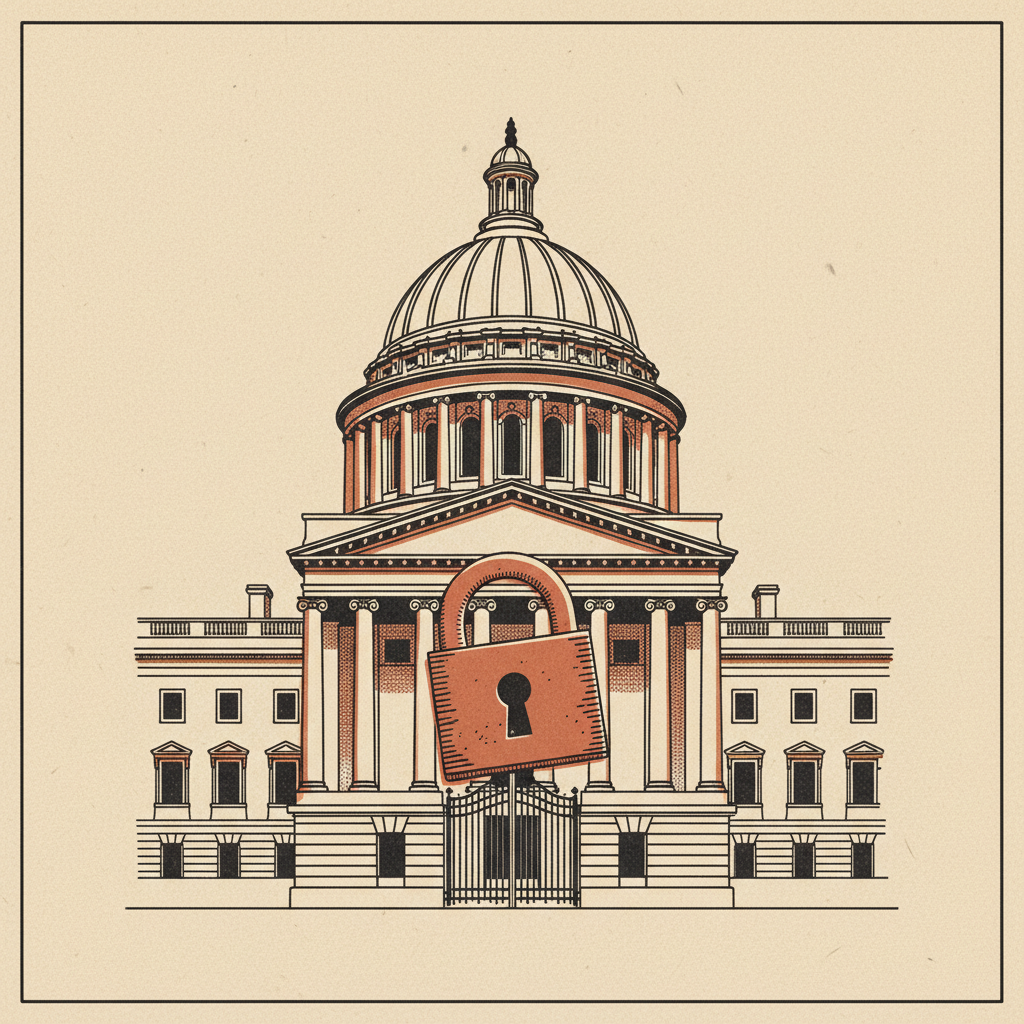
The US government has authorized Anthropic to deploy Claude Mythos 5 to more than 100 US institutions, partially lifting the two-week export control ban. Fable 5 remains restricted, but talks are moving toward a broader resolution.
In this article
What the Government Approved
The government's authorization applies specifically to Claude Mythos 5, Anthropic's strongest cybersecurity-oriented model. Commerce Secretary Lutnick cited significant progress in intense, daily talks between the government and Anthropic since the initial ban. The clearance permits Anthropic to release Mythos 5 to more than 100 US institutions, including major companies and government agencies, according to reporting from Semafor, which broke the story.
The precise list of cleared institutions has not been made public. The phrase trusted partners in Lutnick's letter suggests a vetting process, not automatic restoration of access for all prior customers. Organizations that had Mythos 5 access before June 12 should not assume reinstatement is automatic. Anthropic has confirmed it is working to expand access beyond the initial cohort.
Lutnick's letter to Tom Brown marks the first formal documentation of the government's shift in position. It establishes a clear framework: government certification of appropriate safeguards as the condition for access to frontier AI models. That framework is likely to shape how future access disputes between the government and AI labs are resolved.
Why the Ban Was Issued on June 12
The June 12 ban did not follow a single clear public incident. Reports at the time pointed to two converging factors. First, Amazon CEO Andy Jassy reportedly told US Treasury Secretary Scott Bessent about a purported jailbreak that left Anthropic's models vulnerable to misuse. Second, the White House had grown concerned about China's ability to access Claude Mythos through Anthropic's global user base, which includes non-US nationals.
Anthropic pushed back immediately on June 12, arguing that the identified vulnerabilities were narrow in scope and replicable by other publicly available models. The company characterized the risks as manageable, not unique to Claude. That position did not prevent the ban, but it shaped the negotiations that followed. The two-week timeline from ban to partial clearance reflects those arguments gaining traction at the Commerce Department level.
The ban was also notable for its operational breadth. The directive required Anthropic to disable Mythos 5 and Fable 5 for all customers globally, not just foreign nationals. Non-US citizen Anthropic employees lost access as well. That scope suggested the government's concern was model-level risk containment, not just traditional export control enforcement.
Fable 5 Status: Still Restricted, Talks Continuing
Commerce Secretary Lutnick's June 26 letter is silent on Fable 5, according to Semafor. However, people close to the talks told Semafor that discussions are moving toward releasing Fable as well, though the timeline is unclear.
Anthropic addressed Fable 5 directly in its June 26 post on X. The company stated it is continuing to work with the government to expand access to Mythos 5 and make Fable 5 available for general use again. That framing places Fable 5 restoration as a separate track from the Mythos 5 clearance, not an automatic consequence of it.
For enterprise teams that depended on Fable 5 before June 12, the situation remains unresolved. The restoration of Mythos 5 for trusted partners is a positive signal, but it does not translate into a firm timeline for Fable 5. Organizations should plan operations on the assumption that Fable 5 restriction continues for the next several weeks while monitoring Anthropic's communications for updates.
The Competitive Dimension: OpenAI Gets Similar Treatment
The Mythos 5 partial clearance landed on the same evening that OpenAI announced a limited release of its new GPT-5.6 models. OpenAI described the models as initially available to a small group of trusted partners approved in coordination with the US government, with a broader rollout planned for coming weeks.
The parallel is significant. Both Anthropic and OpenAI are now operating under a framework in which the US government plays an active gatekeeping role in access to frontier AI models. The trusted partner designation is emerging as a mechanism for managing the highest-capability AI systems rather than treating them as commercial products available to any paying customer.
For CEOs, this is a structural shift worth internalizing. AI vendor risk now includes government access risk alongside commercial risk and technical performance risk. A vendor's ability to navigate export controls and maintain government relationships directly affects your team's access to the best available tools. That is a new dimension of enterprise AI strategy that did not exist twelve months ago.
What Enterprise Leaders Should Do Now
Three actions are worth taking this week.
First, contact your Anthropic account team to determine whether your organization qualifies for the trusted partner cohort for Mythos 5 access. The 100-plus institution list has not been made public. If your organization had Mythos 5 access before June 12 and has legitimate use cases, the pathway to reinstatement exists. But it likely requires proactive engagement rather than automatic restoration.
Second, update your contingency planning for Fable 5. The Mythos 5 clearance improves the broader outlook, but Fable 5 remains restricted with no confirmed timeline. If your workflows depend on Fable 5 capabilities, document those dependencies now and assess which use cases can be served by Mythos 5 during the interim period.
Third, brief your legal and compliance teams on the emerging trusted partner framework that both Anthropic and OpenAI are now operating within. This framework, in which Commerce Department certification is a prerequisite for frontier model access, is new. It has implications for vendor procurement risk, contract terms around model availability, and how your organization evaluates AI supply chain resilience going forward.
The government's clearance of Mythos 5 is good news. But it also confirms the new operating reality: access to the most capable AI models is now a managed and conditional asset, not a commodity you can simply purchase and rely on.
Sources: Semafor (June 26, 2026) https://www.semafor.com/article/06/27/2026/us-releases-powerful-anthropic-model-mythos-to-some-us-companies | 9to5Mac (June 26, 2026) https://9to5mac.com/2026/06/26/anthropic-cleared-to-release-claude-mythos-5-to-over-100-us-institutions/
Get the Claude playbook in your inbox.
One weekly email for Claude and Claude Code users. Real workflows, no hype. Subscribe and we send you The Claude Power-User Cheatsheet.
— ¶ —

Luke Thompson
Luke Thompson is the founder of The Operations Guide, LLC and editor of The Claude Insider. Based in Jonesborough, Tennessee, he has spent years building AI-augmented business systems and automation workflows for operators and teams. He began working with large language models in production well before the current wave of consumer AI tools, integrating them into client workflows, content pipelines, and operational infrastructure. At The Claude Insider, he writes about Claude with the specificity of someone who uses it daily as a professional tool — not as a reviewer or commentator, but as a builder. His coverage focuses on what actually works: prompt patterns, API integration strategies, agentic workflows, and the real-world tradeoffs that practitioners face. He is not affiliated with Anthropic, PBC.
Articles are researched and drafted with AI assistance, reviewed and edited by Luke Thompson.
Know where AI can pay off in your company.
Take the free two-minute AI Readiness Assessment. See your score, the two gaps holding you back, and the next move worth making.