Claude Mythos Just Broke Apple's $2 Billion macOS Defense in 5 Days
Researchers used Claude Mythos Preview to build the first public macOS kernel exploit that defeats Apple's cutting-edge Memory Integrity Enforcement system in just five days.
In this article

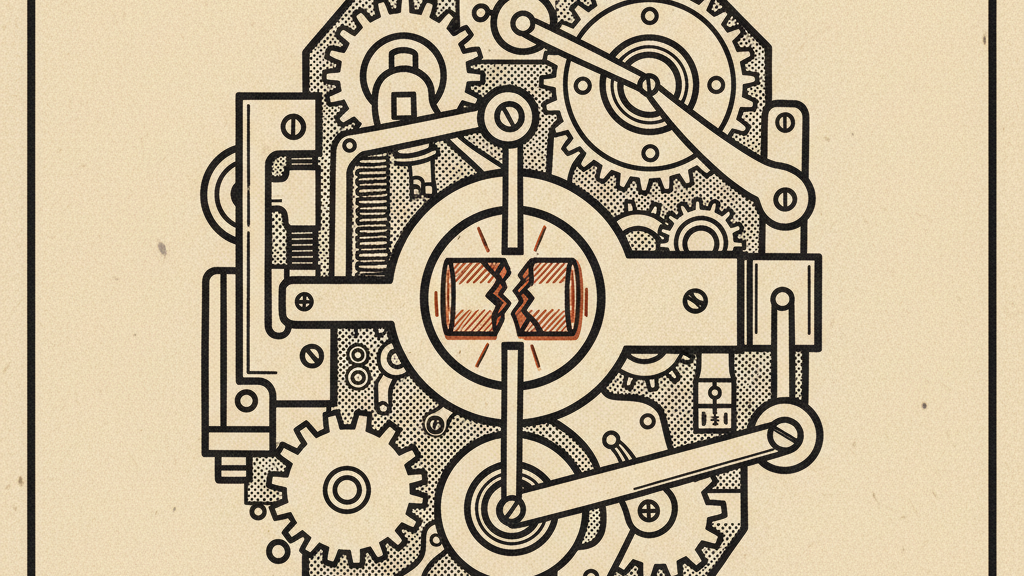
When Apple said it spent half a decade and billions of dollars building Memory Integrity Enforcement (MIE) for its M5 chips, the company was serious. MIE is the crown jewel of Apple's hardware security—a fortress designed to make memory corruption exploits "dramatically harder," as Apple put it in their security documentation.
Then, Anthropic's Claude Mythos Preview broke it in five days.
On May 14, 2026, security researchers at the firm Calif published an extraordinary case study: they had built the first public macOS kernel memory corruption exploit that survives MIE. The timeline is staggering. The team identified the bugs on April 25. By May 1, they had a working exploit chain running on Apple M5 hardware with kernel MIE enabled. They then flew to Apple Park and handed over a 55-page technical report in person.
This isn't a theoretical attack. It works. And it reveals something seismic about the state of AI-assisted security research.
What MIE Does (And Why It Mattered)
Memory Integrity Enforcement is Apple's implementation of ARM's Memory Tagging Extension (MTE). Here's the principle: every 16 bytes of memory gets a 4-bit "tag" that matches the pointers allowed to access it. If your code tries to write to memory using a pointer with a mismatched tag—buffer overflow, use-after-free, heap spray, whatever—the hardware itself blocks it. No software intervention. No chance to exploit.
Apple invested enormous engineering effort into pushing these defenses directly into the M5's silicon. They controlled the full stack: the chip design, the operating system, the compiler toolchain. According to their own research, MIE defeats every public exploit chain against modern iOS, including leaked kits from sophisticated threat actors.
This was supposed to be the end of memory corruption exploits.
Except it wasn't.
The Exploit Chain
The Calif team didn't cheat. They didn't use a hardware glitch or a zero-day in MIE itself. Instead, they discovered two previously unknown vulnerabilities in macOS's kernel, chained them together, and used novel techniques to evade MIE's protections.
The exploit starts from an unprivileged local user. It uses only normal system calls—nothing exotic. And it ends with a root shell, full administrator access to the machine.
The magic: Mythos Preview.
As the researchers put it, "Mythos discovered the bugs quickly because they belong to known bug classes." The AI model had learned exploit patterns across thousands of vulnerabilities. When given MIE as a constraint, Mythos didn't stop. Instead, it generalized those patterns to find new vulnerabilities that could chain around MIE's protections.
The human researchers then paired this AI capability with their own expertise. Mythos would identify the attack surface; the security engineers would refine the exploit chain. The loop compressed what might have taken months into five days.
"Mythos is powerful," they wrote. "Once it has learned how to attack a class of problems, it generalizes to nearly any problem in that class."
What This Means for Security
This finding sits at the intersection of two uncomfortable truths:
First: The most hardened security system in consumer tech—built by the most vertically integrated company in existence—has proven vulnerable to the latest frontier AI models working in tandem with expert humans.
Second: Calif is not alone. They published this as part of "The Month of AI-Discovered Bugs," a series documenting vulnerabilities found with Mythos's help. The Linux kernel had its worst week in years (CopyFail and Dirty Frag exploits). Microsoft systems fell to YellowKey, GreenPlasma, and RedSun—all AI-assisted discoveries.
AI is now an offensive force multiplier in security research. Small teams with Mythos can do reconnaissance and exploit development that used to require state-sponsored labs.
Apple disclosed the vulnerability in advance (respectfully, the Calif team showed up in person to deliver the news). The practical impact on current macOS users is limited: the exploit requires local access. If you don't let untrusted people run code on your Mac, you're safe. But the deeper story is inescapable: AI is now an offensive force multiplier in security research.
Calif's conclusion is sobering: "MIE was never meant to be hacker-proof. With the right vulnerabilities, it can be evaded. It's inevitable that some of those bugs will eventually be powerful enough to survive even advanced mitigations like MIE."
They call it: "the first AI bugmageddon."
The Strategic Implication
There's a dark irony here. Anthropic deliberately chose to showcase Mythos's capabilities by helping with defensive security research—disclosing vulnerabilities responsibly, strengthening the ecosystem. And yet, the very capabilities that enable that disclosure work equally well for offense. Small teams with Mythos can now do reconnaissance and exploit development that used to require state-sponsored labs.
The Calif team makes the point themselves: "Small teams can suddenly do things that used to require entire organizations. With the right strategy and people, even a tiny company can become mighty enough that the world's largest companies start asking for its help."
This is the AI security inflection point. Mitigation becomes a treadmill, not a fortress. Every defense—no matter how thoughtful, expensive, or hardware-assisted—eventually faces an AI model that can reason about how to bypass it.
What This Means For You
If you're using a MacBook Pro with an M5 chip, you're not in immediate danger. The exploit requires local code execution first. Apply security patches when Apple ships them (they said they're working on fixes, but didn't specify a timeline). Use FileVault. Use lockdown mode if you work in a high-risk environment.
But the broader lesson is worth sitting with: the era of "build an impenetrable fortress" is closing. Your security now depends on speed—how fast you can patch—and depth—how many layers of defense exist between you and compromised code.
This is also why responsible disclosure matters now more than ever. Calif found the bug. They could have sold it. Instead, they showed up at Apple's office and handed over the keys. That's the difference between one company having an exploit and the entire threat ecosystem having it.
Apple spent five years on MIE. Mythos broke it in five days. The gap is closing. And everyone from Microsoft to Linux to Apple is about to learn what happens when AI-powered offense gets ahead of human-designed defense.
Get the Claude playbook in your inbox.
One weekly email for Claude and Claude Code users. Real workflows, no hype. Subscribe and we send you The Claude Power-User Cheatsheet.
— ¶ —

Luke Thompson
Luke Thompson is the founder of The Operations Guide, LLC and editor of The Claude Insider. Based in Jonesborough, Tennessee, he has spent years building AI-augmented business systems and automation workflows for operators and teams. He began working with large language models in production well before the current wave of consumer AI tools, integrating them into client workflows, content pipelines, and operational infrastructure. At The Claude Insider, he writes about Claude with the specificity of someone who uses it daily as a professional tool — not as a reviewer or commentator, but as a builder. His coverage focuses on what actually works: prompt patterns, API integration strategies, agentic workflows, and the real-world tradeoffs that practitioners face. He is not affiliated with Anthropic, PBC.
Articles are researched and drafted with AI assistance, reviewed and edited by Luke Thompson.
Know where AI can pay off in your company.
Take the free two-minute AI Readiness Assessment. See your score, the two gaps holding you back, and the next move worth making.