Claude Design Is Live: Anthropic Launches a Visual Design Tool Powered by Opus 4.7
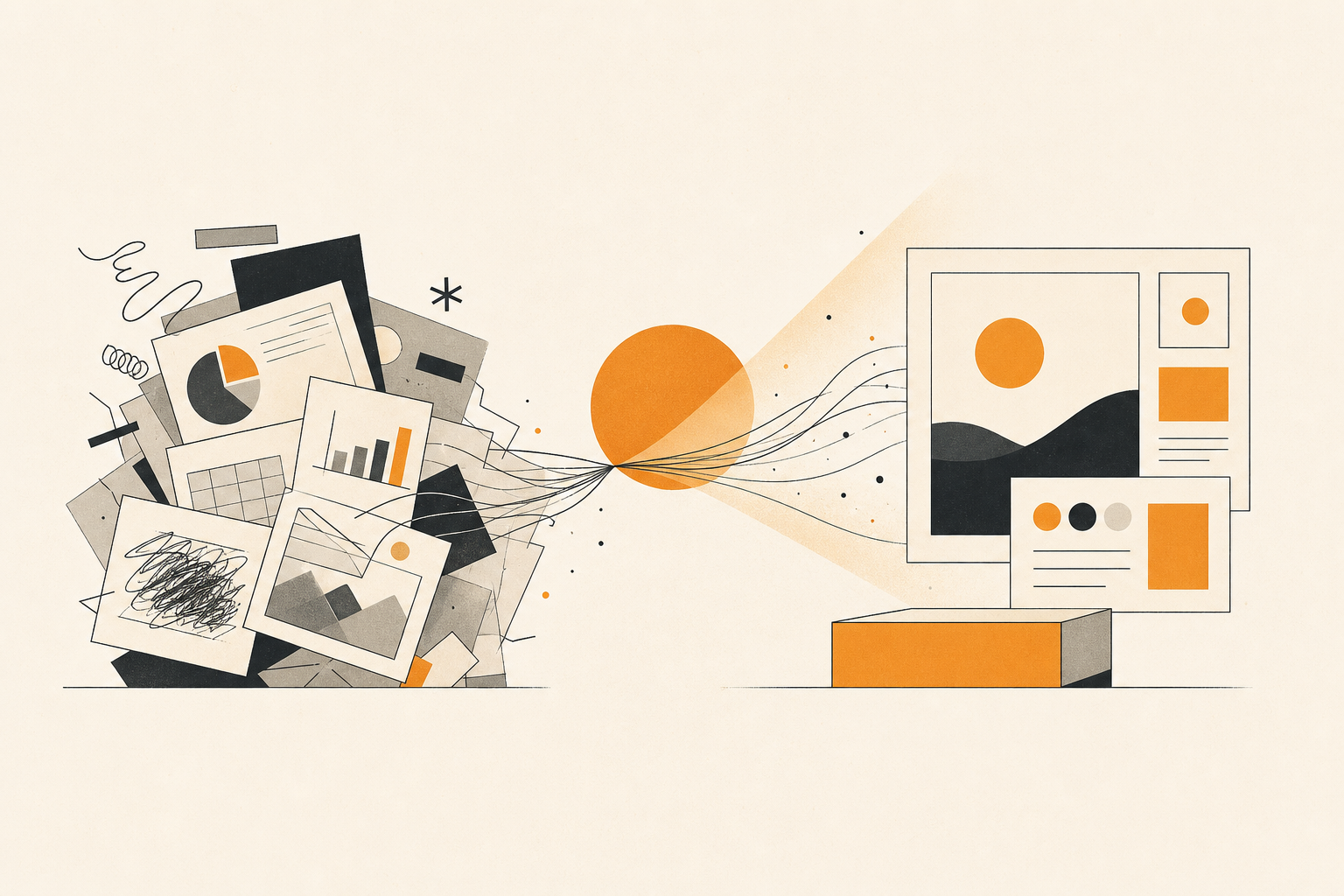
Anthropic launched Claude Design on April 17, an Anthropic Labs product that lets you turn text prompts into polished visual output —...
In this article

What Claude Design Actually Does
Luke Thompson is co-founder and CEO of The Operations Guide, a digital agency that empowers CEOs and business owners to maximize AI inside their businesses through custom software, tool development, and growth marketing.
It's built on Opus 4.7 specifically because design tasks require holding a lot of context simultaneously — brand guidelines, content hierarchy, visual tone, audience. Haiku or Sonnet would produce something, but the coherence at the document level is where Opus 4.7 earns its place.
The workflow Anthropic has set up: Claude Design for the visual artifact, with a handoff path to Claude Code for the implementation. You design a component in Claude Design, then pass it to Claude Code to build it. That's a complete product development loop without leaving the Claude ecosystem.
Why Figma and Adobe Should Pay Attention
Figma's stock dropped 7% on the day of the announcement. That's a significant single-day move for a company of that size — the market genuinely believes Claude Design is competitive. The better read on what's actually happening: Anthropic is attacking the bottom of the design tool market.
Canva chose a smarter response than Figma: they announced a partnership with Anthropic rather than competing. That's the right instinct. AI-native design tools and human-directed design tools are probably going to coexist, with AI handling the first-draft, rough-spec work and professionals handling the refinement.
Claude Design isn't trying to replace Figma for designers. It's trying to replace the design contractor you hire for a quick deck, or the 3-hour Figma session a non-designer spends producing something mediocre. That's a much bigger market.
Availability
Claude Design launched on April 17 as an Anthropic Labs product, available to Pro, Max, Team, and Enterprise Claude subscribers. It's not a separate product with a separate login — it lives within the Claude ecosystem. That's intentional: Anthropic wants design to be one capability among many, not a standalone app you have to context-switch into.
What This Means For You
If you're already on a paid Claude plan: try it for your next internal presentation or one-pager before going to Canva or Figma. The output quality on first drafts is genuinely strong.
If you're a developer using Claude Code: the design-to-code handoff is where this gets interesting. Spec a component in Claude Design, feed it to Claude Code. That loop is faster than the current design-then-spec-then-implement cycle most teams use.
If you're watching the AI-vs-design-tools battle: this is early innings. Claude Design today is roughly equivalent to where Claude Code was 12 months ago — useful enough to generate real concern in the incumbent market, but not yet mature enough to fully displace professional workflows.
Sources & Further Reading
• Introducing Claude Design by Anthropic Labs — Anthropic, April 17, 2026 • Anthropic launches Claude Design, a new product for creating quick visuals — TechCrunch, April 17, 2026 • Anthropic Launches Claude Design as Figma Stock Falls 7% — DesignRush, April 17, 2026
Bridging Design and Code Workflows
The ultimate goal of Claude Design is to collapse the boundary between high-fidelity visual design and working software. Once a designer creates or modifies a mockup within the canvas, the underlying Opus 4.7 model can export clean, production-ready frontend code (React, Vue, or Tailwind-styled HTML). This streamlines developer handoffs, allowing engineering teams to receive fully responsive code layouts rather than static design specs.
Furthermore, Claude Design includes real-time collaboration features. Multiple team members can work within the same workspace, sharing design components, giving feedback, and generating variations concurrently. For design agencies and software companies alike, this visual collaboration workspace dramatically accelerates product design loops and client presentation cycles.
Get the Claude playbook in your inbox.
One weekly email for Claude and Claude Code users. Real workflows, no hype. Subscribe and we send you The Claude Power-User Cheatsheet.
— ¶ —

Luke Thompson
Luke Thompson is the founder of The Operations Guide, LLC and editor of The Claude Insider. Based in Jonesborough, Tennessee, he has spent years building AI-augmented business systems and automation workflows for operators and teams. He began working with large language models in production well before the current wave of consumer AI tools, integrating them into client workflows, content pipelines, and operational infrastructure. At The Claude Insider, he writes about Claude with the specificity of someone who uses it daily as a professional tool — not as a reviewer or commentator, but as a builder. His coverage focuses on what actually works: prompt patterns, API integration strategies, agentic workflows, and the real-world tradeoffs that practitioners face. He is not affiliated with Anthropic, PBC.
Articles are researched and drafted with AI assistance, reviewed and edited by Luke Thompson.
Know where AI can pay off in your company.
Take the free two-minute AI Readiness Assessment. See your score, the two gaps holding you back, and the next move worth making.