Claude Design Is Here: Anthropic Comes for Figma, Adobe, and Every Slide Deck You've Ever Hated
Anthropic just launched Claude Design — an AI workspace that turns prompts into prototypes, decks, and mockups. Here's what it does, who it's for, and why Figma and Adobe stocks dropped.
In this article
What Claude Design Actually Does
Claude Design lives at claude.ai/design and is available in beta release for Pro, Max, Team, and Enterprise subscribers — included in your existing plan limits.
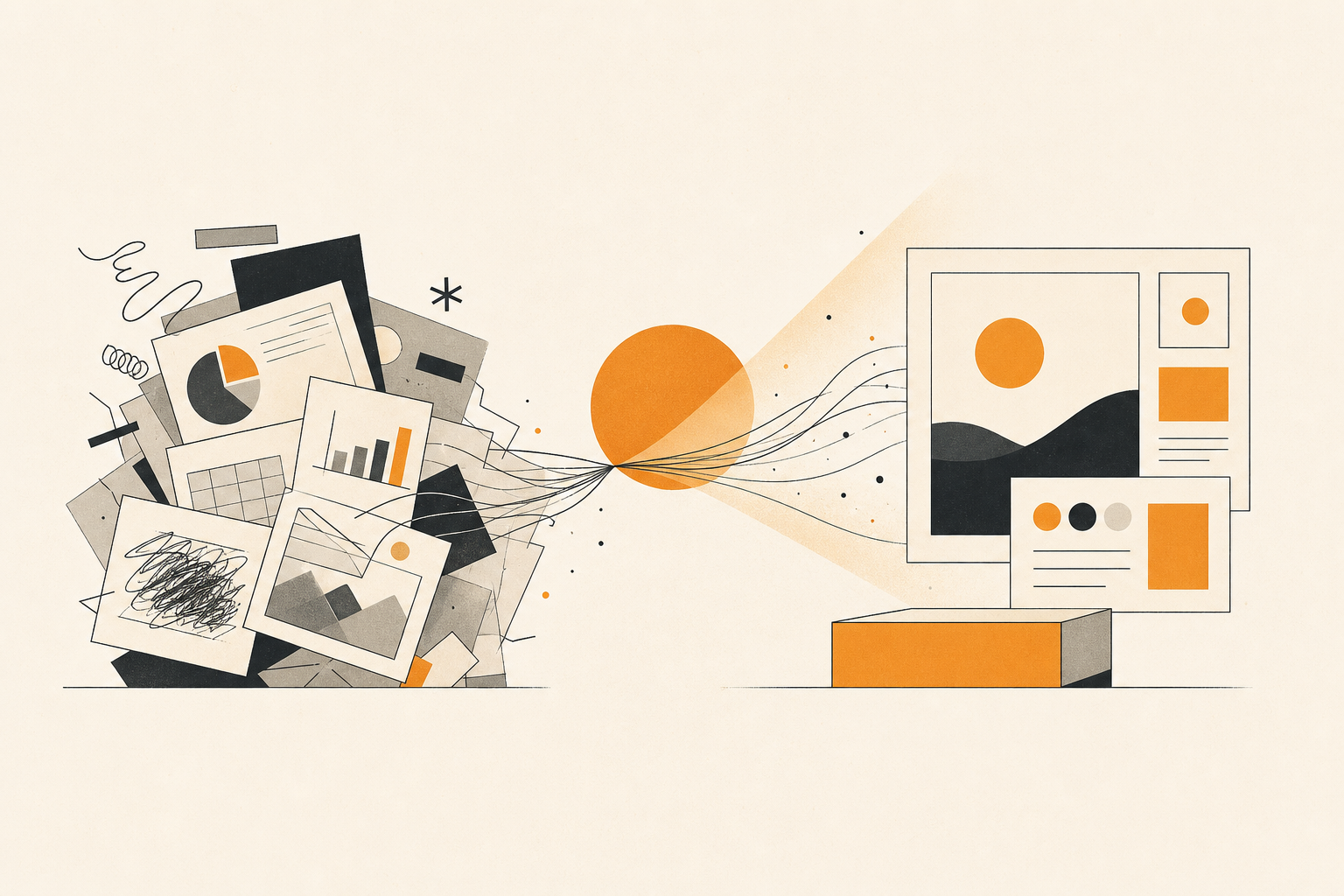
The core workflow is straightforward: describe what you need, Claude builds a first version, and you refine it through conversation, inline comments, or direct edits. But the depth goes further than most AI design tools so far:
- Brand system ingestion: During onboarding, Claude reads your codebase and design files to build a design system. Every project after that uses your colors, typography, and components automatically.
- Import from anywhere: Start from a prompt, upload DOCX/PPTX/XLSX files, paste images, or use the web capture tool to grab elements directly from your live website.
- Fine-grained controls: Comment on specific elements, edit text inline, or use Claude-generated adjustment sliders to tweak spacing, color, and layout live.
- Claude Code handoff: When a design is ready to build, Claude packages it into a handoff bundle you can pass directly to Claude Code with one instruction. (See also: Claude Opus 4.7) (See also: Claude Code) Claude Mythos Found 10,000+ Critical Software V... Claude Mythos Found 10,000+ Critical Bugs in On... Microsoft's Maia Chips Could Soon Power Claude ... KPMG Just Gave 276,000 Employees Access to Clau...
The Use Cases Worth Paying Attention To
Anthropic is positioning this around five specific workflows — and honestly, all five are real pain points:
- Realistic prototypes — Turn static mockups into shareable interactive prototypes without code review or PRs
- Product wireframes — PMs can sketch feature flows and hand off directly to Claude Code for implementation
- Pitch decks — From rough outline to complete on-brand deck in minutes, export as PPTX or send to Canva
- Design explorations — Quickly generate a wide range of directions to explore, instead of bottlenecking on one
- Marketing collateral — Landing pages, social assets, campaign visuals — then loop in designers to polish
Brilliant, a consumer education product known for complex interactive animations, said Claude Design got them from rough idea to working prototype before anyone left the room. Their most complex pages that used to need 20+ prompts in other tools needed just 2 in Claude Design.
Why Adobe and Figma Stocks Dropped
The market reaction was fast. Adobe and Figma shares fell the day of the announcement — not because Claude Design immediately replaces either product, but because of what it signals.
Figma's moat has always been collaboration + developer handoff. Claude Design directly addresses both. The org-scoped sharing, group conversations, and Claude Code handoff bundle hit exactly the workflows Figma owns today.
Adobe's risk is slightly different — it's more about the creative starting point. If professionals start ideation in Claude Design instead of Photoshop or Illustrator, Adobe loses the top of the funnel. That's harder to recover from than losing a feature.
The Canva integration is interesting: Canva is explicitly partnering with Anthropic rather than competing, letting users push Claude Design output directly into Canva for further refinement. Smart positioning from Canva.
The Opus 4.7 Connection
Claude Design is explicitly powered by Opus 4.7's vision capabilities — the improved image resolution support that shipped with yesterday's model release isn't incidental. Anthropic clearly built both in tandem.
The "frontier design" use case mentioned in the announcement — code-powered prototypes with voice, video, shaders, 3D, and built-in AI — is the most interesting long-term signal. That's not a design tool. That's an interactive experience builder. It's closer to what Framer is doing, but with Claude's reasoning and generation capabilities behind it.
What This Means For You
If you're a designer: This is a threat and an accelerant at the same time. The threat is obvious — clients will start asking why a rough version didn't take 20 minutes. The accelerant is real too: exploration that used to require burning a day can happen in a morning.
If you're a PM or founder: This is the most practical thing Anthropic has shipped for non-technical product work. The ability to wireframe → hand off to Claude Code in one pipeline removes one of the most annoying friction points in early-stage product development.
If you're an operator or consultant: Pitch decks and one-pagers built on your existing brand system, in minutes. The export-to-PPTX and Canva integration means the output actually lands in tools your clients use.
Claude Design is in beta release, which means expect rough edges. But the core workflow is real, it's available now on paid plans, and the design industry reaction suggests Anthropic found a genuine nerve.
Sources & Further Reading
- Anthropic: Introducing Claude Design by Anthropic Labs — Official launch announcement with full feature breakdown
- Barron's: Adobe Stock Drops — Why Anthropic's New Claude Launch Is Rattling Investors — Market reaction analysis
- Times of India: What is Anthropic's Claude Design and why are Figma and Adobe stocks dropping — Investor and industry context
- Sherwood News: Anthropic launches Claude Design, sending Figma shares down — Stock movement detail
Get the Claude playbook in your inbox.
One weekly email for Claude and Claude Code users. Real workflows, no hype. Subscribe and we send you The Claude Power-User Cheatsheet.
— ¶ —

Luke Thompson
Luke Thompson is the founder of The Operations Guide, LLC and editor of The Claude Insider. Based in Jonesborough, Tennessee, he has spent years building AI-augmented business systems and automation workflows for operators and teams. He began working with large language models in production well before the current wave of consumer AI tools, integrating them into client workflows, content pipelines, and operational infrastructure. At The Claude Insider, he writes about Claude with the specificity of someone who uses it daily as a professional tool — not as a reviewer or commentator, but as a builder. His coverage focuses on what actually works: prompt patterns, API integration strategies, agentic workflows, and the real-world tradeoffs that practitioners face. He is not affiliated with Anthropic, PBC.
Articles are researched and drafted with AI assistance, reviewed and edited by Luke Thompson.
Know where AI can pay off in your company.
Take the free two-minute AI Readiness Assessment. See your score, the two gaps holding you back, and the next move worth making.