Claude Design Just Launched: Anthropic's AI Canvas for Visuals, Prototypes, and Slides
Anthropic Labs has quietly launched Claude Design, a collaborative canvas for visuals, prototypes, and slides. Here is our hands-on review.
In this article
What Is Claude Design?
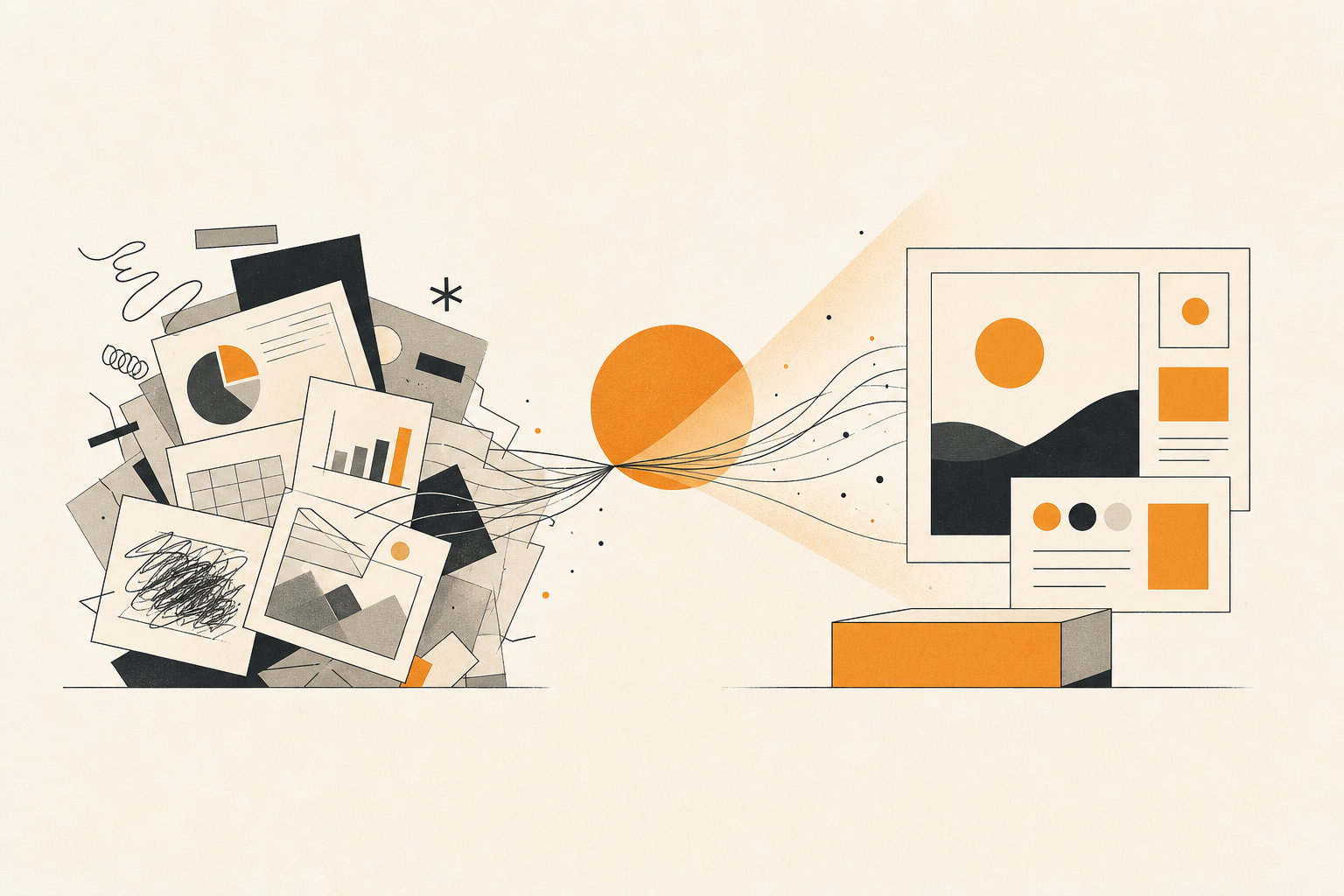
Claude Design is a canvas interface where Claude and you iterate together on visual work. You describe what you want, Claude generates it, and you can refine — color, layout, typography, structure — without switching tools. It's built for the gap between a blank Figma file and needing a full design system.
What You Can Build
- Designs: Layout work, UI mockups, visual concepts
- Prototypes: Interactive wireframes and clickable flows
- Slides and presentations: Decks, one-pagers, pitch documents
- Graphics and visual assets: Diagrams, infographics, branding sketches
Why This Matters: The Designer's Paradox
Designers have three options right now: (1) Use pure code (React, CSS, web frameworks) which requires engineering. (2) Use visual tools like Figma, which is powerful but slow for exploration. (3) Use AI image generators, which gives you images but not editable design. Claude Design fills a fourth lane: collaborative visual reasoning.
You say what you want, Claude understands the design intent (not just the words), and builds it so you can iterate. That's different from Figma AI plugins or Canva's AI features — those are helpers inside existing tools. Claude Design is designed for the conversation itself.
The Real Use Case: Rapid Iteration
This is strongest for exploration: you need 5 mockup directions by EOD, or a pitch deck in 2 hours, or you're designing something you can't quite visualize. Claude does the heavy lifting on structure and layout. You focus on the direction and rationale. It's faster than Figma cold-start, more flexible than template generators.
It's weaker for pixel-perfect enterprise design work where every detail matters and handoff to engineers is critical. That's still Figma. But for internal tools, MVP UIs, pitch decks, and exploratory design work? Claude Design cuts the time from hours to minutes.
Where It Fits in the Claude Ecosystem
Claude Design is an Anthropic Labs product — meaning it's experimental, and Anthropic is testing product-market fit. Like Claude Code started as a Labs experiment, this could become a core Claude.ai feature or a standalone product. For now, it's available on Claude.ai. Try it, give feedback, and help Anthropic figure out whether designers actually want to work this way.
What This Signals
Anthropic is expanding Claude beyond text. Code (Claude Code), now visuals (Claude Design). The pattern is clear: start with a domain, build a specialized interface, and let Claude reason through complex tasks in that domain. Next could be audio, data modeling, or other modalities where thinking matters more than generation.
Sources & Further Reading
Anthropic Newsroom: Introducing Claude Design by Anthropic Labs — anthropic.com/news/claude-design-anthropic-labs
Get the Claude playbook in your inbox.
One weekly email for Claude and Claude Code users. Real workflows, no hype. Subscribe and we send you The Claude Power-User Cheatsheet.
— ¶ —

Luke Thompson
Luke Thompson is the founder of The Operations Guide, LLC and editor of The Claude Insider. Based in Jonesborough, Tennessee, he has spent years building AI-augmented business systems and automation workflows for operators and teams. He began working with large language models in production well before the current wave of consumer AI tools, integrating them into client workflows, content pipelines, and operational infrastructure. At The Claude Insider, he writes about Claude with the specificity of someone who uses it daily as a professional tool — not as a reviewer or commentator, but as a builder. His coverage focuses on what actually works: prompt patterns, API integration strategies, agentic workflows, and the real-world tradeoffs that practitioners face. He is not affiliated with Anthropic, PBC.
Articles are researched and drafted with AI assistance, reviewed and edited by Luke Thompson.
Know where AI can pay off in your company.
Take the free two-minute AI Readiness Assessment. See your score, the two gaps holding you back, and the next move worth making.