Claude Cowork Goes Web and Mobile: What the July 7 Launch Means for Your Team
Anthropic launched Claude Cowork on web and mobile on July 7, 2026, giving Max subscribers cross-device task execution that keeps running after you close your laptop. A new Microsoft 365 write connector, available on all plans, lets Claude draft emails, manage calendars, and create files in OneDrive and SharePoint.
In this article
Anthropic expanded Claude Cowork to web and mobile on July 7, 2026, and simultaneously launched a Microsoft 365 write connector that enables Claude to draft emails, manage calendar events, and create or update files in OneDrive and SharePoint. Both changes ship together and both matter for organizations that have been treating Claude as a desktop-only productivity tool.
Cowork launched on desktop in January 2026 as Anthropic's answer to the question of what Claude looks like running autonomously on a real workstation. The January version was anchored to local machine access. The July update decouples presence from execution. You do not need to be at your computer for Cowork to continue working.
For Max subscribers, the rollout started July 7. Other plan tiers get access over the coming weeks.
What Moved to Web and Mobile
The web and mobile versions of Cowork are not a full replica of the desktop app. The desktop remains the primary environment for tasks that require local file access, browser control, or computer automation. Web and mobile serve a different function: they let you start, monitor, steer, and approve tasks from any device.
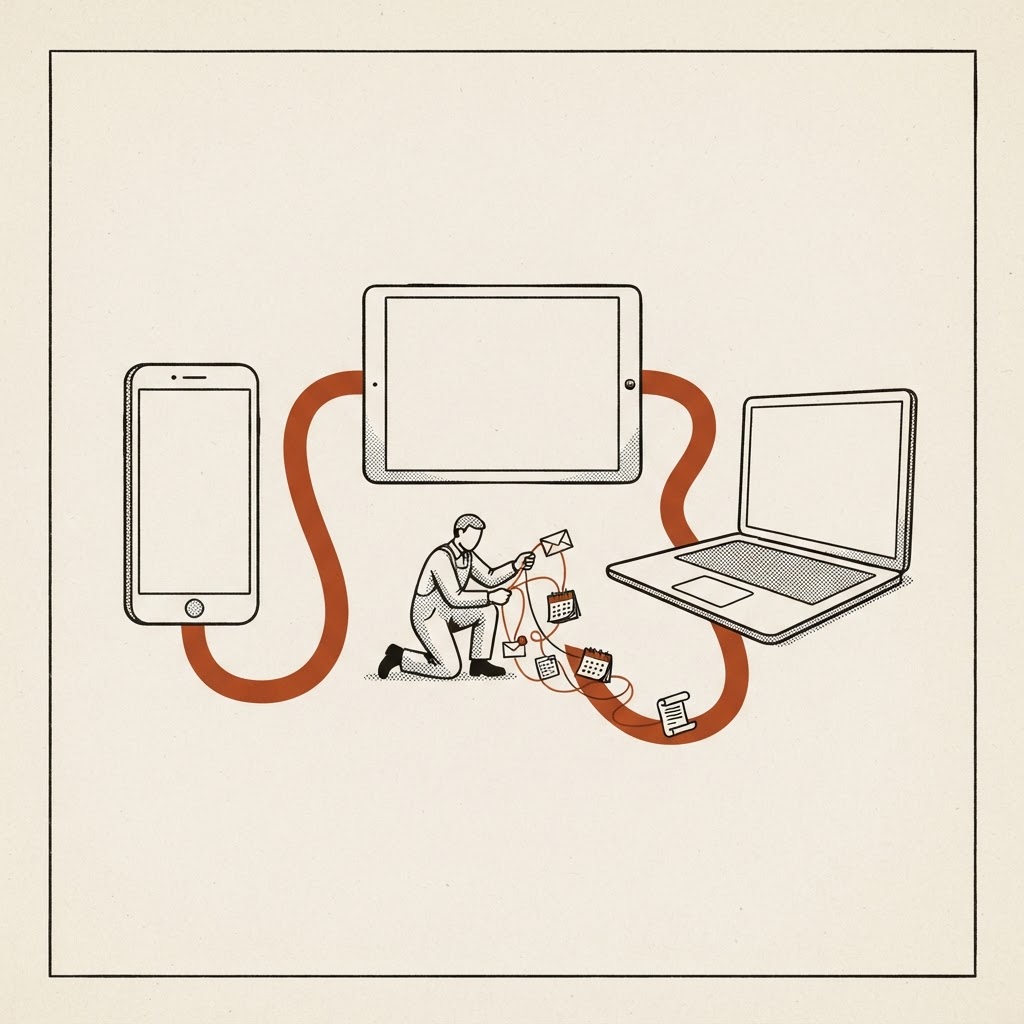
The core capability is background execution. A Cowork session started on your office desktop continues running after you close the lid. You check in from your phone during a commute, review the output, approve the next step, and let it keep going. The session does not pause when your device goes offline.
Anthropics usage data from 1.2 million sampled Cowork sessions between May 11 and May 31, 2026 is instructive. The breakdown by task type: business operations and process work at 33.4%, content creation and copywriting at 16.4%, and software development at 8.7%. The majority of Cowork usage is not coding. It is business operations. Web and mobile access makes that use case considerably easier to manage across a full workday.
Early users also receive doubled Cowork usage limits through August 5, 2026, a promotional offer tied directly to the web and mobile launch.
The Microsoft 365 Write Connector
Also launching on July 7, and applying to every Claude plan including Free, is the expanded Microsoft 365 connector.
Until July 7, the Microsoft 365 connector was read-only. Claude could search email threads and read documents but could not take action inside Microsoft products. That boundary is now adjustable by organizational administrators.
With write permissions enabled through Microsoft Entra administrator consent, Claude can now draft and send email on a user's behalf, manage calendar events, update mailbox settings, and create or update files in OneDrive and SharePoint. Teams integration remains read-only. Writing to a shared communication channel carries a higher risk of unintended consequence, so Anthropic has maintained that boundary for now.
The Entra administrator requirement is significant. These capabilities cannot be switched on by individual employees. An IT admin must grant organizational consent through Microsoft's standard Entra workflow. For enterprise sales conversations, this framing works in Anthropic's favor: the decision goes to the people who manage identity and access, not to individual users finding workarounds. It is a sanctioned integration that requires deliberate organizational approval.
What Changes for Your Team
Two shifts follow from these launches.
First, Cowork is no longer a desk-bound workflow. If your organization has delayed deploying Cowork because it requires staff to remain at their workstations, that constraint is gone. You can assign multi-hour research tasks, document drafts, or content production runs in the morning and review finished outputs from your phone by noon. The agent keeps working. You stay in control without being physically present at a machine.
Second, the M365 write connector changes what Claude is within enterprise infrastructure. For organizations that enable write permissions, Claude can act directly on documents and email threads rather than sitting as an advisory layer beside your productivity stack. This shifts the governance question immediately. Your legal and IT teams need policies about when Claude is authorized to send email or create documents on behalf of employees. That conversation is not optional once the capability is live.
The doubled usage limits through August 5 represent a meaningful incentive. If your organization has been evaluating a Cowork deployment, the next four weeks are a lower-cost window to run a substantive pilot and generate real usage data before committing to a broader rollout.
The Competitive Context
Microsoft launched Copilot Cowork generally available in June 2026, positioning it as the native AI agent inside Microsoft 365 workflows. Anthropic's product launched on desktop the same month and has now followed with web and mobile. The two products are converging on the same use case: a persistent AI agent that handles multi-step business work.
Anthropics response is not to out-native Microsoft on Microsoft's own platform. It is to make Claude available everywhere, capable on all platforms, and now able to take write actions inside Microsoft's infrastructure through a sanctioned connector.
For enterprise buyers evaluating AI agent deployments, the comparison question becomes concrete: does the organization want Microsoft's native model handling email drafting and document creation, or a third-party model with a different reasoning profile that connects to the same infrastructure through an IT-approved integration? That is a genuine procurement question, and the M365 write connector makes it possible to ask it seriously and evaluate it fairly.
Three Actions for This Week
First, if you are on a Max plan, Cowork on web and mobile is available now. Start with a task that typically takes two to four hours. Launch it in the morning, close your laptop, and check progress from your phone. The direct experience tells you more than any specification document.
Second, send the Microsoft 365 connector documentation to your IT or Microsoft Entra administrator. The write tools require organizational admin consent. The conversation to start now is about which permission scope fits your existing access and data policies, not whether to enable these capabilities eventually. Getting the question to the right person this week means you are not two weeks behind when a business case requires it.
Third, revisit your Cowork use case inventory. The usage data from Anthropic shows 33.4% of sessions are business operations, not software development. If your team has categorized Cowork as a developer tool, that framing is limiting your reach. Client brief preparation, contract review support, proposal drafting, and internal documentation production are all legitimate Cowork use cases for non-technical staff, and they account for the majority of actual usage.
Sources
Claude Help Center: Release Notes, July 7, 2026 https://support.claude.com/en/articles/12138966-release-notes
TechCrunch: The coding-agent wars are spilling into the rest of the office, July 7, 2026 https://techcrunch.com/2026/07/07/the-coding-agent-wars-are-spilling-into-the-rest-of-the-office-claude-cowork/
Winbuzzer: Anthropic Opens Claude Cowork Beta to Mobile and Web, July 8, 2026 https://winbuzzer.com/2026/07/08/anthropic-opens-claude-cowork-beta-to-mobile-and-web-xcxwbn/
Claude: Microsoft 365 Connector https://claude.com/connectors/microsoft-365
Get the Claude playbook in your inbox.
One weekly email for Claude and Claude Code users. Real workflows, no hype. Subscribe and we send you The Claude Power-User Cheatsheet.
— ¶ —

Luke Thompson
Luke Thompson is the founder of The Operations Guide, LLC and editor of The Claude Insider. Based in Jonesborough, Tennessee, he has spent years building AI-augmented business systems and automation workflows for operators and teams. He began working with large language models in production well before the current wave of consumer AI tools, integrating them into client workflows, content pipelines, and operational infrastructure. At The Claude Insider, he writes about Claude with the specificity of someone who uses it daily as a professional tool — not as a reviewer or commentator, but as a builder. His coverage focuses on what actually works: prompt patterns, API integration strategies, agentic workflows, and the real-world tradeoffs that practitioners face. He is not affiliated with Anthropic, PBC.
Articles are researched and drafted with AI assistance, reviewed and edited by Luke Thompson.
Know where AI can pay off in your company.
Take the free two-minute AI Readiness Assessment. See your score, the two gaps holding you back, and the next move worth making.