Anthropic Opens Public AI Accountability Portal: What the Hard Questions Initiative Means for Enterprise Teams
Anthropic launched its Inviting Hard Questions initiative on July 9, 2026, backed by surveys of 133,000 people and the creation of the Anthropic Institute. Here is what the public accountability framework means for enterprise teams building on Claude.
In this article
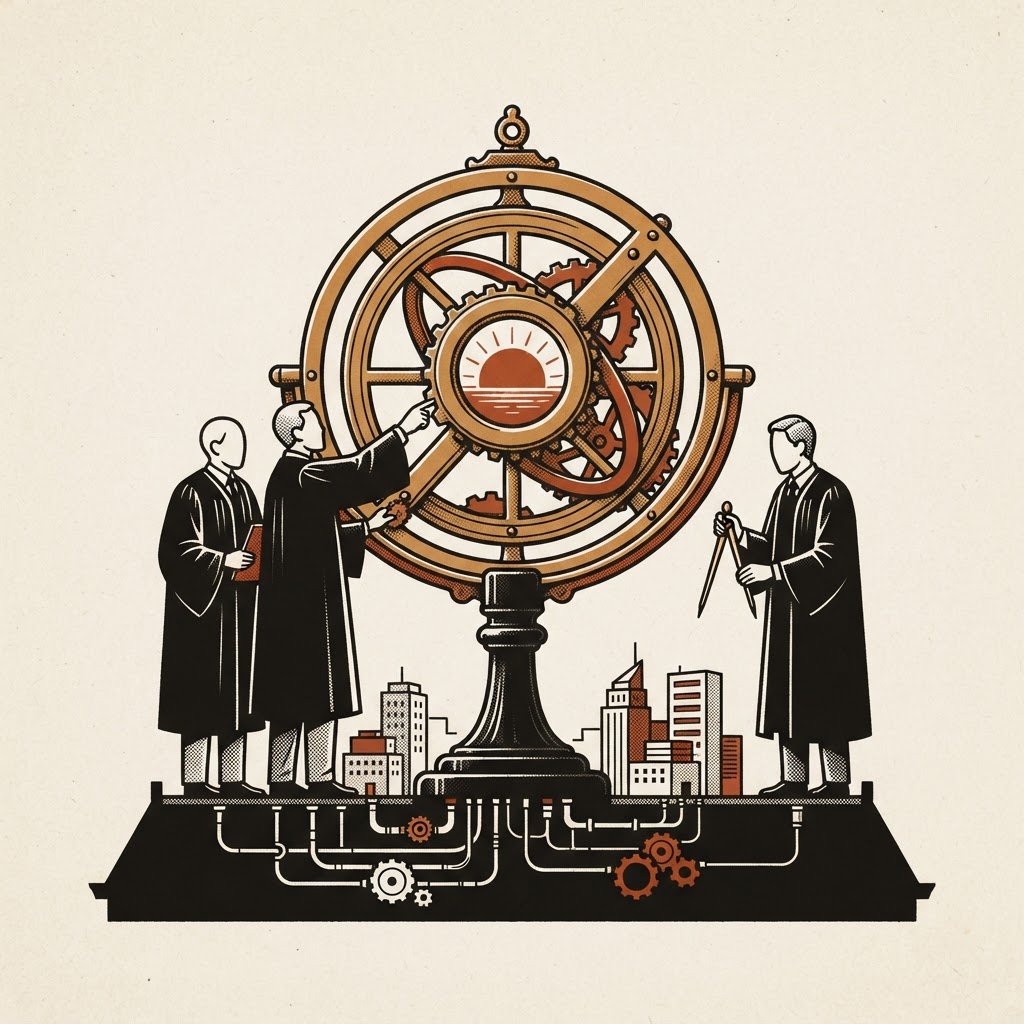
On July 9, 2026, Anthropic launched a formal public engagement initiative called Inviting Hard Questions. The company opened a dedicated portal where anyone can submit questions about AI's societal impact, and committed to publicly tracking and reporting specific actions taken in response. The initiative is backed by the most comprehensive public input effort Anthropic has conducted: surveys of 52,000 Americans through the Anthropic Public Record program, and 81,000 Claude users across 159 countries and 70 languages through its Anthropic Interviewer tool, plus dozens of in-person focus groups and analysis of anonymized usage data. Alongside the announcement, Anthropic formalized the creation of the Anthropic Institute, a new organizational body dedicated to addressing the societal challenges created by advanced AI.
What the Initiative Is and What Anthropic Is Committing To
The initiative is centered on a public portal where submitted questions are logged and tracked. Anthropic's core commitment is to report specific actions taken in response to submitted concerns, including transparency about areas where it has not acted and why. That accountability structure sets this apart from a standard corporate communications exercise. Anthropic operates as a Public Benefit Corporation, which carries legal obligations to pursue public benefit alongside financial returns. The initiative formalizes a feedback loop between public concerns and corporate action, with the Long-Term Benefit Trust providing independent governance oversight to ensure Anthropic holds to its mission.
What 133,000 Respondents Told Anthropic
The research Anthropic conducted before launching the initiative represents the most comprehensive direct public input survey any major AI company has published. The Anthropic Public Record surveyed 52,000 Americans on their hopes and concerns about AI. A separate study using Anthropic's own Interviewer tool gathered responses from 81,000 Claude users across 159 countries in 70 languages. The core questions the initiative frames reflect these findings: whether AI will displace jobs at scale, whether its capabilities will be distributed equitably or concentrated among a few, whether it introduces new systemic risks, and whether it can accelerate scientific breakthroughs such as treatments for disease. The questions Anthropic has foregrounded are not hypothetical edge cases. They represent the specific, recurring concerns that tens of thousands of respondents surfaced independently across different geographies and languages.
The Anthropic Institute
The Anthropic Institute is a new body created to address significant societal challenges posed by advanced AI. Anthropic has positioned it as a dedicated research and engagement function focused on the kinds of long-term questions that product development alone cannot answer. The Institute operates alongside the Long-Term Benefit Trust and Anthropic's existing safety research teams. Its creation signals that Anthropic is treating societal impact as a research and operational priority, not purely as a communications function. For enterprise buyers evaluating Anthropic's long-term institutional trajectory, the Institute represents an additional actor that will study and publish on AI's broader effects, adding a layer of accountability beyond internal safety teams.
How the Public Accountability Mechanism Works
The central feature of the initiative is the public tracking commitment. Anthropic has stated it will publish specific actions taken in response to submitted questions and disclose instances where it has not acted and why. This is a structurally different commitment from the policy statements AI companies have historically made. A policy statement records an intention. A public tracking report records what happened against that intention. The combination of the Anthropic Institute conducting research on societal impact and the portal creating a public record of submitted concerns and responses builds a cycle of input, action, and reported outcomes. Whether that cycle proves substantive will depend on the quality of the first accountability reports Anthropic publishes.
Additional Commitments: Claude Corps and Free Scientific Access
Alongside the public engagement initiative, Anthropic highlighted two operational programs tied to its public benefit commitments. The first is free AI access for scientists, an offer that addresses the equity concern raised by respondents who worry that advanced AI capabilities will remain accessible only to well-resourced institutions. The second is Claude Corps, a fellowship program that pairs early-career professionals with nonprofit organizations to build AI capacity in the social sector. These programs give the initiative concrete operational backing rather than leaving it as a statement of principle. For enterprise teams that have their own ESG commitments around technology access and workforce development, the existence of these programs provides reference points when reporting on the broader impact of their Claude deployments.
Why This Matters for Enterprise Teams
For organizations deploying Claude at scale, Anthropic's public accountability governance has direct procurement relevance. Enterprise procurement, legal, and risk teams increasingly require AI vendors to demonstrate alignment with ESG frameworks and responsible AI standards. The Inviting Hard Questions initiative creates a public record of what Anthropic says it will address and what it has done. That record is usable by procurement teams assessing vendor commitments and by compliance functions reporting on AI governance to boards and regulators. It is also useful for benchmarking: if Anthropic commits to specific actions on workforce impact, enterprise teams can track whether those commitments materialize in product and policy decisions.
The initiative also signals Anthropic's preparation for its IPO. The company filed a confidential S-1 with the Securities and Exchange Commission in June 2026. When that filing becomes public, institutional investors will examine Anthropic's public benefit commitments under the scrutiny that private funding rounds did not require. The Inviting Hard Questions initiative, the Anthropic Institute, and the LTBT's independent governance authority collectively form the evidence base for Anthropic's argument that safety-first AI development and financial performance are compatible at public-company scale. For enterprise teams that have built multi-year AI strategies around Claude, the credibility of that argument has direct implications for the vendor's long-term stability and mission continuity.
Three Things to Watch
First, watch for Anthropic Institute publications. The Institute's credibility will be established by the quality, independence, and depth of the research it produces. Early outputs will indicate whether it operates as a genuine research body or as a communications vehicle. Second, watch the portal's accountability reports. Anthropic has committed to publishing a record of actions taken in response to submitted questions. The first such report will be the concrete test of whether the commitment is substantive or performative. Third, watch how the public benefit governance framework appears in the S-1. When Anthropic's prospectus becomes public, the formal legal description of the LTBT's authority, the Anthropic Institute's mandate, and the company's public benefit obligations will define what institutional investors and enterprise buyers can hold Anthropic accountable to over the long term.
Get the Claude playbook in your inbox.
One weekly email for Claude and Claude Code users. Real workflows, no hype. Subscribe and we send you The Claude Power-User Cheatsheet.
— ¶ —

Luke Thompson
Luke Thompson is the founder of The Operations Guide, LLC and editor of The Claude Insider. Based in Jonesborough, Tennessee, he has spent years building AI-augmented business systems and automation workflows for operators and teams. He began working with large language models in production well before the current wave of consumer AI tools, integrating them into client workflows, content pipelines, and operational infrastructure. At The Claude Insider, he writes about Claude with the specificity of someone who uses it daily as a professional tool — not as a reviewer or commentator, but as a builder. His coverage focuses on what actually works: prompt patterns, API integration strategies, agentic workflows, and the real-world tradeoffs that practitioners face. He is not affiliated with Anthropic, PBC.
Articles are researched and drafted with AI assistance, reviewed and edited by Luke Thompson.
Know where AI can pay off in your company.
Take the free two-minute AI Readiness Assessment. See your score, the two gaps holding you back, and the next move worth making.