Pentagon Appeals Judge's Ruling That Blocked Anthropic Blacklist
The Department of Defense filed an appeal on April 2 challenging the federal court order that temporarily blocked the Pentagon from designating Anthropic as a supply-chain risk — escalating a landmark legal battle over AI safety guardrails and government control.
In this article
Background: How We Got Here
The dispute began when Anthropic refused to remove safety restrictions from Claude, its flagship AI model. The Department of Defense wanted unrestricted access to Claude for "all lawful purposes," including lethal autonomous operations and mass surveillance of American citizens. Anthropic said no — publicly and repeatedly — citing its responsible AI commitments.
In retaliation, the DoD moved to classify Anthropic as a "supply-chain risk" under a rarely-used national security statute. That designation would have effectively blacklisted Anthropic from doing business with any federal agency, contractor, or supplier — potentially costing the company hundreds of millions of dollars in lost contracts. (See also: what comes next for Anthropic and the Pentagon) (See also: Anthropic's White House deal)
The Pentagon Files an Appeal
On April 2, the Department of War (the recently renamed DoD) filed a formal appeal challenging the preliminary injunction issued by U.S. District Judge Rita F. Lin in San Francisco. The appeal targets the March 26 ruling directly, arguing the court overstepped by blocking a legitimate national security determination.
The Pentagon's appeal pushes the case toward the 9th Circuit Court of Appeals, adding another layer to the already multi-front legal battle. A separate proceeding is also active at the D.C. Circuit Court of Appeals on a related statute underpinning the supply-chain designation.
What Judge Lin's Ruling Did
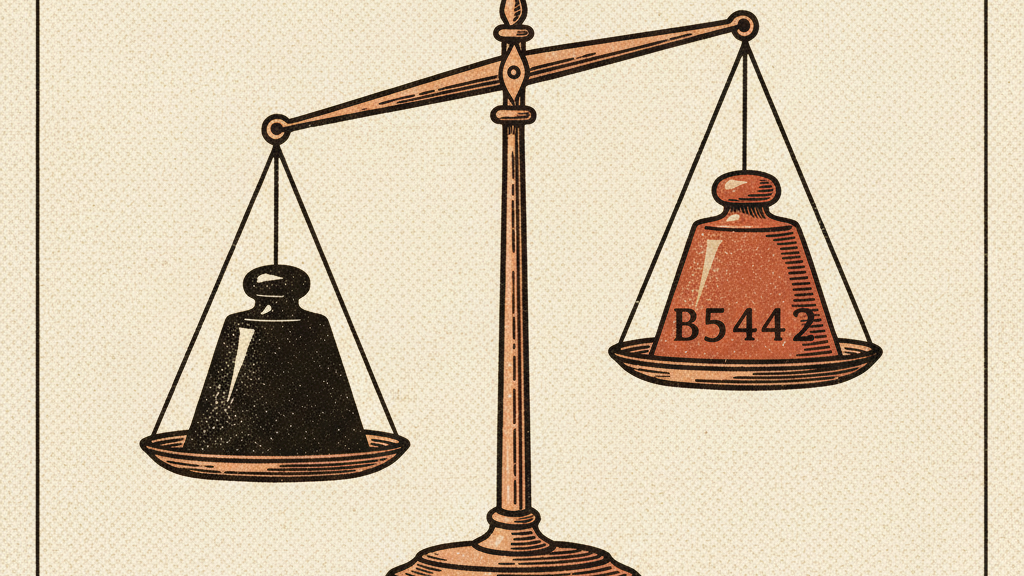
In her 43-page ruling on March 26, Judge Lin blocked the Pentagon's supply-chain risk designation, calling it First Amendment retaliation — punishment for Anthropic publicly disagreeing with the government, not a legitimate security determination.
The order allowed Anthropic to continue working with federal agencies and contractors while the case proceeds. Without it, the blacklisting would have taken effect immediately, triggering what Anthropic called a potentially existential financial threat.
"This case marks the first known instance of the supply-chain risk designation being applied to a U.S.-based company." — National Today, April 2, 2026
Why This Case Is Historic
The DoD has used supply-chain risk designations against foreign-owned companies before — but applying it to a domestic AI firm is unprecedented. Legal observers say the outcome could set a powerful precedent for how the federal government can pressure private technology companies to remove safety guardrails.
If the government ultimately prevails, it would effectively grant the DoD leverage to compel AI companies to strip ethical restrictions from their models as a condition of doing business with federal agencies. If Anthropic wins, it establishes that an AI company's public stance on ethics is protected speech — and cannot be punished through procurement blacklisting.
Anthropic's Position
Anthropic has maintained throughout that it is not anti-military. The company has said it is willing to support a wide range of lawful defense applications — including cybersecurity, logistics, and intelligence analysis — but draws a hard line at uses that could enable autonomous lethal weapons or mass domestic surveillance.
Anthropic's lawyers sent a letter to the D.C. Circuit informing them of Judge Lin's ruling, arguing it "further supports Anthropic's entitlement to a stay pending review." The company has framed the fight not just as a business dispute but as a constitutional question about whether the government can punish companies for expressing disagreement.
What Happens Next
The case is now heading toward two parallel appellate tracks. The 9th Circuit will hear the new appeal from the DoD challenging Judge Lin's preliminary injunction. Simultaneously, the D.C. Circuit is reviewing the underlying statute the Pentagon relied on to make the supply-chain designation in the first place.
Legal experts caution that even with Judge Lin's ruling, Anthropic isn't in the clear. "Practically speaking, not that much has changed on the supply chain designation for Anthropic due to this preliminary injunction," said Charlie Bullock of the Institute for Law and AI. The preliminary injunction is not a final ruling — it only freezes the blacklisting while litigation continues.
Broader Implications for AI Companies
The battle has become a flashpoint in a wider debate about the role of private AI companies in national security. Other AI developers — including OpenAI, Google DeepMind, and Meta — are watching closely. If the DoD's strategy of using procurement blacklisting to coerce AI policy changes succeeds, every major AI lab could face similar pressure.
For now, the fight continues. The Pentagon's appeal means this saga will likely run through at least late 2026 — and potentially set the terms under which American AI companies operate at the frontier for years to come.
Get the Claude playbook in your inbox.
One weekly email for Claude and Claude Code users. Real workflows, no hype. Subscribe and we send you The Claude Power-User Cheatsheet.
— ¶ —

Luke Thompson
Luke Thompson is the founder of The Operations Guide, LLC and editor of The Claude Insider. Based in Jonesborough, Tennessee, he has spent years building AI-augmented business systems and automation workflows for operators and teams. He began working with large language models in production well before the current wave of consumer AI tools, integrating them into client workflows, content pipelines, and operational infrastructure. At The Claude Insider, he writes about Claude with the specificity of someone who uses it daily as a professional tool — not as a reviewer or commentator, but as a builder. His coverage focuses on what actually works: prompt patterns, API integration strategies, agentic workflows, and the real-world tradeoffs that practitioners face. He is not affiliated with Anthropic, PBC.
Articles are researched and drafted with AI assistance, reviewed and edited by Luke Thompson.
Know where AI can pay off in your company.
Take the free two-minute AI Readiness Assessment. See your score, the two gaps holding you back, and the next move worth making.