Claude Mythos vs GPT-5.5 Cyber: The War Over Who Controls Cybersecurity AI
Two AI giants just released two very different approaches to the same problem: giving AI the power to find software...
In this article
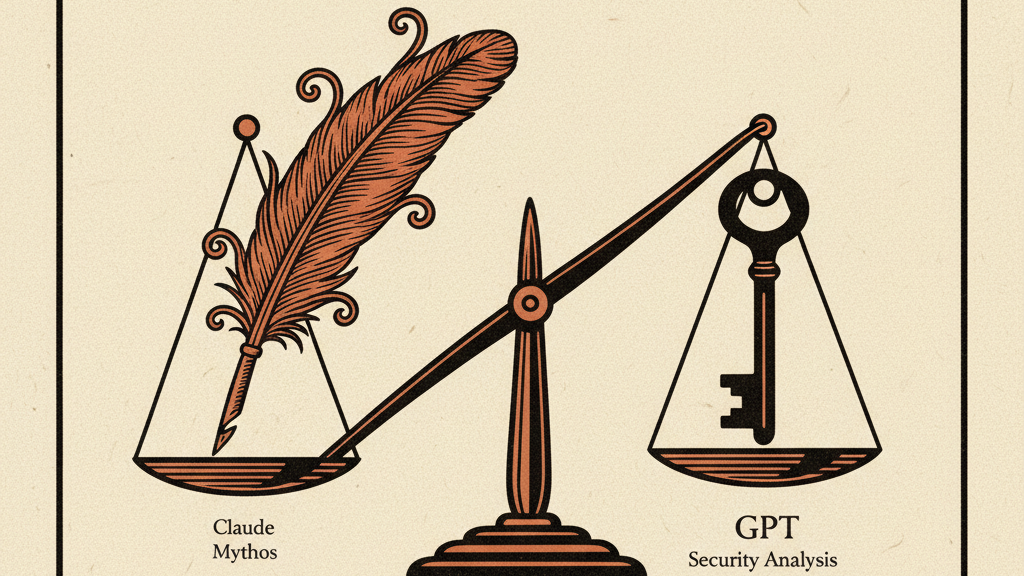
The Models: Mythos is Scarier, Cyber is More Useful
Let's get the specs out of the way. Mythos is more advanced. It can process larger contexts, retain more information, and analyze more data in a single prompt. It has already found undiscovered vulnerabilities—including a 27-year-old bug in major browsers that Mozilla credited to Mythos research. That's not marketing. That's proof of concept.
GPT-5.5 Cyber is less capable but more accessible. It can find vulnerabilities, analyze malware, and defend systems—but OpenAI positions it as a tool for defenders, not researchers. Any cybersecurity professional can apply for access through identity verification. No million-dollar contract required.
Anthropic's fear: Mythos could be misused to launch automated cyberattacks at scale. OpenAI's bet: Defenders need access more than attackers do, so open it up with safeguards.
Why Anthropic Is Playing It Conservative
Anthropic's thesis is that Mythos is too powerful to release widely. A model that can autonomously find vulnerabilities, plan exploits, and potentially execute them without human intervention is, in Anthropic's view, a weapon. They've limited access to Project Glasswing—a consortium of major orgs (AWS, Microsoft, Google, JPMorgan, etc.) with in-house security teams who can use Mythos to scan their own systems before wider release.
The logic is sound: better for a handful of trusted institutions to find bugs in critical infrastructure than for the model to be widely available and potentially misused. But there's a second angle, which CEO Sam Altman accidentally pointed out: this looks like a great business model. Lock the powerful stuff behind a high-priced gate, sell access to enterprises. Anthropic has denied this is 'fear-based marketing,' but it's worth noting that enterprise AI security is becoming a huge revenue driver.
Why OpenAI Is Betting On Access
OpenAI's counter-argument: AI-powered vulnerability discovery is already happening. Attackers are already using weaker models to find exploits faster. The only way to keep pace is to give defenders access to equally powerful tools. Keeping Cyber locked away doesn't prevent the bad guys from using it—it just handicaps the good guys.
This is a real strategic divergence. Anthropic assumes the best defense is bottlenecking supply. OpenAI assumes the best defense is democratizing access. For developers and security teams in the middle market, OpenAI's approach wins—they get tools they otherwise couldn't afford.
The Financial Angle
Mythos is 10–12 times more expensive per API call than GPT-5.5 Cyber. That's a massive price gap, and it reinforces the access strategy. Anthropic's model: exclusive, high-price, enterprise-only. OpenAI's model: broader access, lower per-use cost, volume scaling. For a startup security firm, GPT-5.5 Cyber is the only option they can afford.
What This Means For Cybersecurity Teams
- If you're at a major enterprise: You'll likely get access to both. Mythos from Anthropic's Glasswing program, Cyber from OpenAI. Use both.
- If you're at a mid-market firm: GPT-5.5 Cyber is your option. It's powerful enough for real work and priced like a SaaS tool, not a consulting engagement.
- If you're a independent researcher or startup: Same—go GPT-5.5 Cyber. The barrier to entry is low, and you can integrate it into your security pipeline immediately.
- If you're inside Anthropic's 40 orgs: You have access to the more capable tool, but Mythos comes with guardrails and oversight. You're not getting unlimited power.
The Broader Implication: AI Governance Is Fractured
This divergence highlights a fundamental tension in AI governance. How do you balance safety (limiting access to powerful tools) with equity (giving everyone access to the same tools)? There's no consensus. Anthropic says: 'Safety first, even if that means restricting access.' OpenAI says: 'Access first, with safety measures built in.' Neither is obviously wrong, which is why both approaches are shipping.
For regulators watching this unfold, the lesson is clear: The AI companies themselves are choosing different paths. Mandating one approach will be harder than you think because each has legitimate tradeoffs.
What This Means For You
If you're building or securing software, you now have a choice. Both Mythos and GPT-5.5 Cyber will find vulnerabilities that humans miss. Mythos is more powerful, but you can't use it unless your org is chosen. GPT-5.5 Cyber is accessible, and it's good enough for most real-world security work. The market will sort this out—watch which approach delivers better security outcomes over the next 12 months. That's your real answer.
Sources & Further Reading
India Today — Claude Mythos vs GPT-5.5 Cyber: Anthropic and OpenAI's cybersecurity strategies. Anthropic News — Project Glasswing announcement and Mythos research. OpenAI Blog — GPT-5.5 Cyber and Trusted Access for Cyber details.
Get the Claude playbook in your inbox.
One weekly email for Claude and Claude Code users. Real workflows, no hype. Subscribe and we send you The Claude Power-User Cheatsheet.
— ¶ —

Luke Thompson
Luke Thompson is the founder of The Operations Guide, LLC and editor of The Claude Insider. Based in Jonesborough, Tennessee, he has spent years building AI-augmented business systems and automation workflows for operators and teams. He began working with large language models in production well before the current wave of consumer AI tools, integrating them into client workflows, content pipelines, and operational infrastructure. At The Claude Insider, he writes about Claude with the specificity of someone who uses it daily as a professional tool — not as a reviewer or commentator, but as a builder. His coverage focuses on what actually works: prompt patterns, API integration strategies, agentic workflows, and the real-world tradeoffs that practitioners face. He is not affiliated with Anthropic, PBC.
Articles are researched and drafted with AI assistance, reviewed and edited by Luke Thompson.
Know where AI can pay off in your company.
Take the free two-minute AI Readiness Assessment. See your score, the two gaps holding you back, and the next move worth making.