Claude Code Artifacts Brings Live Dashboards to the Terminal — What Enterprise Teams Need to Know
Anthropic's new Claude Code Artifacts turns terminal sessions into live, interactive dashboards that non-technical stakeholders can view in real time. The feature deliberately avoids backend persistence — and that's the point.
In this article
What Claude Code Artifacts Actually Does
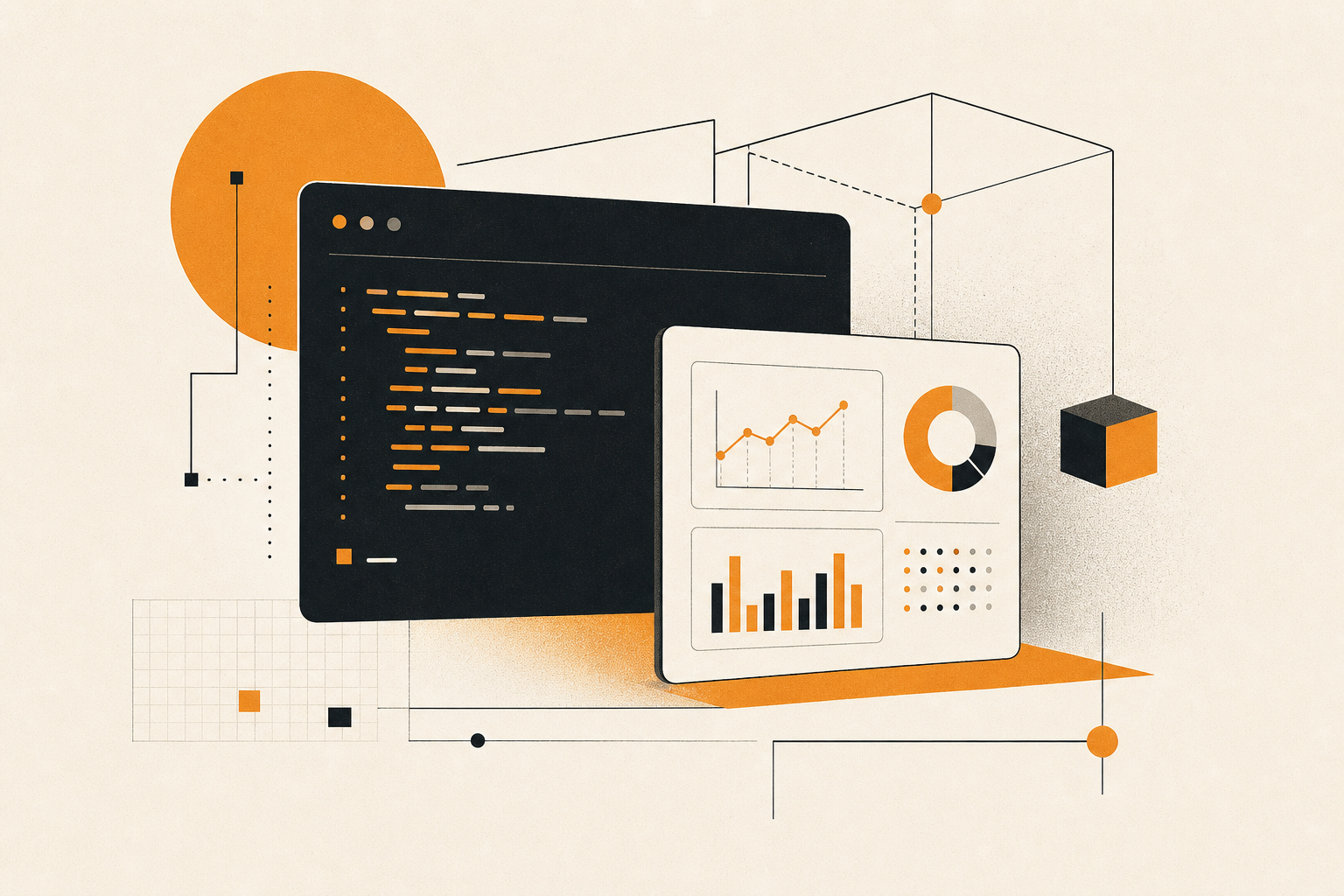
At its core, Artifacts acts as a dynamic translation layer between what Claude Code produces in the terminal and what non-technical teammates need to see. An engineer can prompt Claude Code to investigate a user drop-off, and within seconds the agent executes an SQL read, builds an interactive funnel dashboard, and generates a secure link that a product manager can open on their phone.
These pages are not static exports. As Claude Code continues working, the open webpage refreshes in place, updating charts and text instantly at the same URL. Every update publishes a new version history, letting teammates roll back or track the agent's progress. The system pulls directly from the local repository codebase and connected monitoring tools — no external wiring required.
Boris Cherny, the lead and creator of Claude Code, described the impact on X: 'I've been using Artifacts in Claude Code for everything: visual explanations of tricky code, system diagrams, quick previews of a few animation options, data analyses and dashboards I share with the team. They are a game changer for how I work with Claude.'
Artifacts vs. Codex Sites: A Philosophical Divide
The timing is not coincidental. OpenAI released Codex Sites two weeks before Artifacts, and the two products represent fundamentally different philosophies about what enterprise AI workspaces should be.
OpenAI is building a platform-as-a-service. Codex Sites generates durable, full-stack web applications with persistent backend infrastructure — D1 relational databases for structured data, R2 object storage for file uploads, external identity provider support, and a two-stage Git-commit publishing process. Sites can serve as production internal tools, complete with public sign-ins and role-based access controls.
Anthropic is building a stateless canvas. The Artifacts documentation is blunt: 'An artifact is a capture of work, not an application.' Each Artifact is a single, self-contained HTML page capped at 16 MiB. Claude wraps it in a strict Content Security Policy that blocks all external network requests — no external scripts, fonts, stylesheets, fetch calls, XHR, or WebSockets. All CSS and JavaScript must be inlined, images must be embedded as data URIs. Artifacts cannot store form input, call an API at view time, or serve multiple routes.
Anthropic's deliberate technical limitation is its philosophical position. While OpenAI wants to replace internal SaaS tools, Anthropic wants to replace whiteboard diagrams, manual bug walkthroughs, and status reports with secure, self-updating visual tools that never leak live data outside the corporate boundary.
Security and Access: Private by Default
Every Artifact is private to its author by default and cannot be made public to the broader internet. When an engineer shares a link, it is viewable exclusively by authenticated members of their specific organization. System administrators retain ultimate control through org-level toggles, role-based scoping, and explicit retention policies managed through a centralized compliance API.
This approach is designed for enterprises where security reviews have historically blocked tools that could expose proprietary code or data. By blocking all external network requests, Anthropic eliminates the attack surface that compliance teams worry about with browser-based tools.
What This Means For Your Business
Claude Code Artifacts changes how engineering teams communicate with the rest of the organization. For enterprise leaders, the implications are practical and immediate.
- Faster stakeholder alignment: Instead of waiting for sprint demos or slide decks, product managers and executives can watch engineering progress in real time at a URL. This cuts the feedback loop from days to minutes.
- Security-first design: The no-backend, no-external-requests architecture means compliance teams can approve Artifacts faster than full-stack alternatives. If your organization has been hesitant about AI-generated dashboards, Artifacts' stateless design may change the conversation.
- Team and Enterprise plans only: Artifacts requires a Team or Enterprise subscription, which means it is built for organizations, not individual developers. If your team is on Pro plans, this is a reason to evaluate an upgrade.
- Watch the platform war: The Artifacts vs. Codex Sites battle will accelerate feature development on both sides. If your organization is choosing between Claude and ChatGPT ecosystems, the dashboard and collaboration layer should be part of your evaluation criteria.
Sources & Further Reading
VentureBeat: Anthropic's Claude Code Artifacts update brings live, shared dashboards — https://venturebeat.com/data/anthropics-claude-code-artifacts-update-brings-live-shared-dashboards-and-interactive-workspaces-to-enterprises | Anthropic Claude Code Artifacts documentation — https://docs.anthropic.com/en/docs/claude-code/artifacts | OpenAI Codex Sites documentation — https://platform.openai.com/docs/codex/sites
Get the Claude playbook in your inbox.
One weekly email for Claude and Claude Code users. Real workflows, no hype. Subscribe and we send you The Claude Power-User Cheatsheet.
— ¶ —

Luke Thompson
Luke Thompson is the founder of The Operations Guide, LLC and editor of The Claude Insider. Based in Jonesborough, Tennessee, he has spent years building AI-augmented business systems and automation workflows for operators and teams. He began working with large language models in production well before the current wave of consumer AI tools, integrating them into client workflows, content pipelines, and operational infrastructure. At The Claude Insider, he writes about Claude with the specificity of someone who uses it daily as a professional tool — not as a reviewer or commentator, but as a builder. His coverage focuses on what actually works: prompt patterns, API integration strategies, agentic workflows, and the real-world tradeoffs that practitioners face. He is not affiliated with Anthropic, PBC.
Articles are researched and drafted with AI assistance, reviewed and edited by Luke Thompson.
Know where AI can pay off in your company.
Take the free two-minute AI Readiness Assessment. See your score, the two gaps holding you back, and the next move worth making.