Anthropic Is Selling Claude's Power While Warning About Its Dangers
Anthropic is pulling off an unusual act: building products developers love while warning governments the technology could be dangerous. But can it sustain both?
In this article
The Developer Story
At Code w/ Claude, Anthropic's London developer event, the energy was pure tech exuberance. Boris Cherny (who created Claude Code) talked about reconnecting with the magic of programming. Developers in the audience talked about a renaissance in coding. Anthropic demoed new features, new capabilities, and new ways to make Claude do more work faster. It was a masterclass in product marketing—and completely devoid of warnings about AI safety.
One moment stood out: An Anthropic researcher asked the crowd how many had shipped Claude-generated code without reading it first. A shocking number of hands went up. The researcher's response? "That's a dangerous game." Then he moved on to talking about how to squeeze more productivity from Claude Code.
The Policymaker Story
Forty-eight hours later, Clark gave a lecture at Oxford that could have been from a different company entirely. He warned that AI posed a non-zero risk of killing humanity. He predicted that by 2028, AI would reach recursive self-improvement—the ability to improve itself without human intervention. He said most of the world is "in denial" about how capable current AI already is, let alone what's coming.
Clark's message was stark: We've underestimated how fast this is moving. When Claude Mythos (a model so powerful Anthropic didn't release it publicly) finished training, even Anthropic was shocked at how good it was. "We were like, 'Oh, it's here! It's here faster than we thought! And we've done insufficient preparation.'" That quote should keep everyone awake at night.
Why This Matters (And What It Reveals)
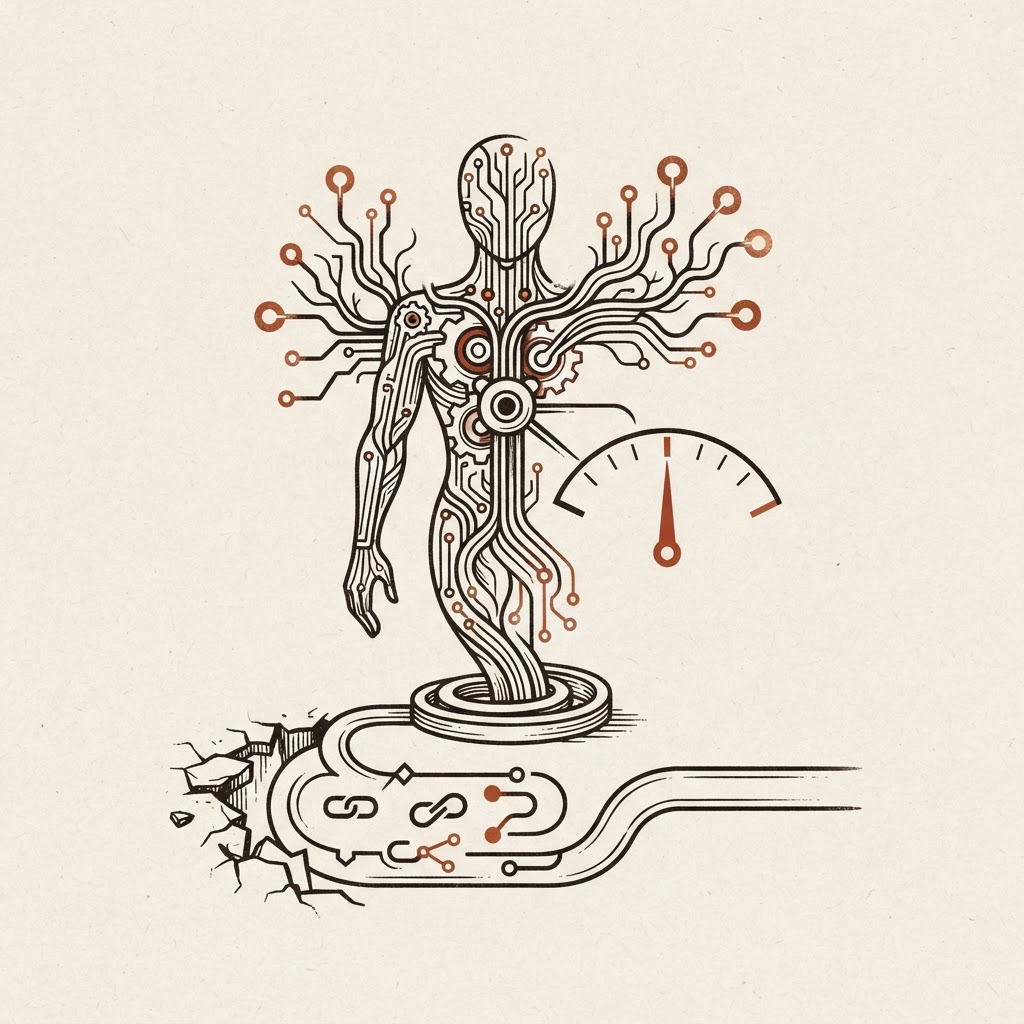
Here's what's actually happening: Anthropic is using developer enthusiasm to fund research that's making AI more capable at an alarming rate. That same money goes to funding research and policy work that openly warns about those same dangers. It's the opposite of hypocrisy—it's actually more honest than what other companies are doing. But it's also structurally unstable.
Anthropic can't keep selling "magical" Claude while simultaneously warning policymakers it's dangerous. Eventually, one narrative will win out. If developers believe the safety warnings, enthusiasm fades and revenue takes a hit. If policymakers believe the product narrative, Anthropic loses credibility on safety.
For enterprise buyers (which is you, if you're deploying Claude at scale), this duality actually matters. It means Anthropic is probably not bluffing about the risks—if they were, why would Clark be warning Oxford? It also means Anthropic is probably not going to slow down building capabilities just to be "safe." The company needs to ship fast to fund its research. You need to understand both sides of that tension when evaluating Claude for production workloads.
What This Means For You
If you're building with Claude: Keep reading the code your AI generates. Anthropic's honest about the risks, which makes them more trustworthy than competitors who aren't. But that also means you can't assume Claude will always do the right thing. Guardrails, testing, and human review matter more now, not less.
If you're evaluating Claude for enterprise: The fact that Anthropic's founders are warning about AI safety is actually a selling point. They're not hiding the risks—they're being vocal about them publicly. That transparency is worth something.
Sources & Further Reading
TIME: "A Tale of Two Anthropics" by Billy Perrigo — The original reporting from Anthropic's London developer event and Jack Clark's Oxford lecture. Anthropic: Introducing Claude Mythos — Details on Project Glasswing and Claude Mythos's capabilities. Jack Clark's work on AI risk measurement — Clark's Alignment Research Center published research on measuring AI capabilities and risks.
Get the Claude playbook in your inbox.
One weekly email for Claude and Claude Code users. Real workflows, no hype. Subscribe and we send you The Claude Power-User Cheatsheet.
— ¶ —

Luke Thompson
Luke Thompson is the founder of The Operations Guide, LLC and editor of The Claude Insider. Based in Jonesborough, Tennessee, he has spent years building AI-augmented business systems and automation workflows for operators and teams. He began working with large language models in production well before the current wave of consumer AI tools, integrating them into client workflows, content pipelines, and operational infrastructure. At The Claude Insider, he writes about Claude with the specificity of someone who uses it daily as a professional tool — not as a reviewer or commentator, but as a builder. His coverage focuses on what actually works: prompt patterns, API integration strategies, agentic workflows, and the real-world tradeoffs that practitioners face. He is not affiliated with Anthropic, PBC.
Articles are researched and drafted with AI assistance, reviewed and edited by Luke Thompson.
Know where AI can pay off in your company.
Take the free two-minute AI Readiness Assessment. See your score, the two gaps holding you back, and the next move worth making.