Anthropic Warns: How China Is Stealing Claude's Brain (And What It Means)
AI model distillation attacks are the new frontier of IP theft. No hack. No vulnerability. Just API calls. Here's what Anthropic just warned about.
In this article
Anthropic just published a warning about something most people don't understand yet: distillation attacks. Not a hack. Not a vulnerability. Just a legal, patient, industrial-scale method for stealing the intelligence inside a proprietary AI model like Claude. China is doing it. Google, OpenAI, and Anthropic are all affected. And the U.S. government is scrambling to respond.
What Is a Distillation Attack?
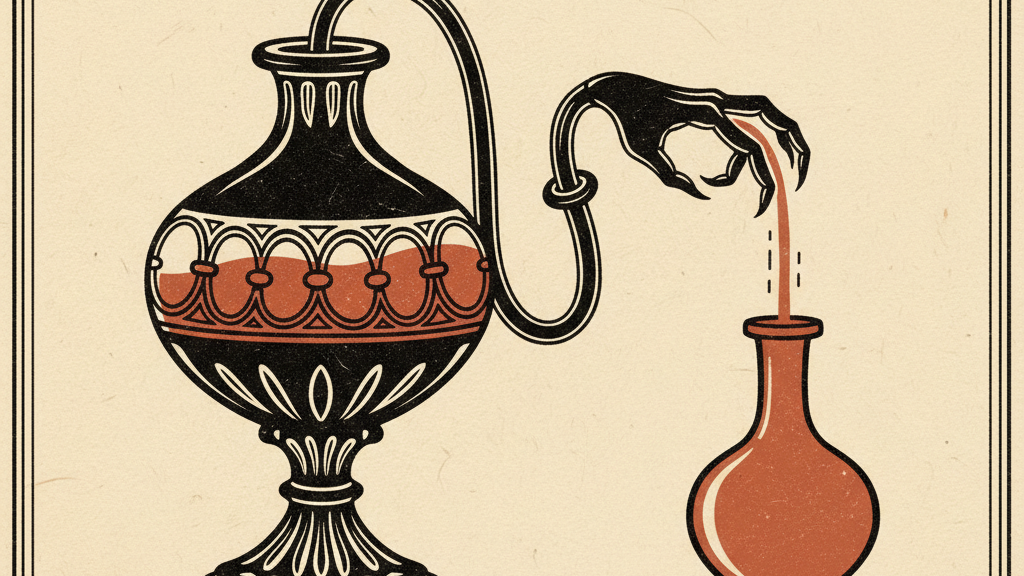
Think of Claude as a box of secrets. Everything it knows is locked inside. You can ask it questions through an API, but you can't see the weights, the architecture, or the internal structure that makes it smart.
A distillation attack says: You don't need to steal the box. Just query it millions of times and use the outputs to train a replica.
How it works:
- Query phase: An attacker runs a synthetic dataset through Claude's API—maybe 10 million prompts, each designed to probe a specific capability.
- Collection phase: They collect all the outputs, storing the input-output pairs.
- Training phase: They take those millions of input-output pairs and train a new model to mimic Claude's behavior.
- Result: A new model that behaves exactly like Claude, built from nothing but API calls.
No passwords broken. No server compromised. No vulnerability exploited. Just patience and API access.
Why This Matters (And Why It's Hard to Stop)
Claude costs Anthropic hundreds of millions to train. It took them years to build the architecture, run the experiments, hire the safety team, and harden the system. All of that value is now extractable through 10 million API queries.
The worst part: there's no way to distinguish a distillation attack from normal usage. An attacker running 10 million queries looks like a busy startup. Anthropic can't block it without blocking legitimate customers.
AnthropicEst. Total queries to distill Claude: 16 million+ (documented cases) Cost to attacker: ~$50K–200K in API credits Value stolen: Billions of dollars in R&D
It's asymmetric theft. The attacker pays peanuts. The victim loses everything.
Illicitly distilled models also create national security risks. A stolen Claude means an adversarial nation or criminal group now has an AI system that passes all the safeguards Anthropic built. No constitutional AI. No alignment work. Just the raw capability to generate code, malware, social engineering content, and synthetic data at scale—without the guardrails.
How Anthropic Detected It
Anthropic didn't catch this by looking at payment patterns. They caught it by analyzing query patterns.
Normal Claude usage looks like humans: users ask questions, pause, read, think, and ask follow-ups. It's bursty and conversational.
Distillation attacks look like machines: sequential synthetic queries, zero pauses, perfect coverage of edge cases. A distillation attacker needs to query every possible scenario to train a replica—so they generate synthetic prompts that systematically explore Claude's behavior space.
Anthropicanalyzed the query log and found:
- Identical synthetic prompts being run in rapid succession
- Automated, deterministic input patterns (no human randomness)
- Systematic coverage of specific domains (law, biology, code, etc.)
- Zero think time between queries
Then Anthropic took the next step: they trained a machine learning model to detect distillation queries in the wild. Now they can flag suspicious patterns in real-time.
Who's Doing This?
According to U.S. intelligence and Anthropic's analysis, the primary actors are Chinese AI labs and state-sponsored research groups. Why China specifically?
- Speed to capability: China is behind on foundational model research. Distillation lets them skip years of R&D.
- Cost efficiency: Training a large language model from scratch costs $100M+. Distillation costs < $1M.
- Regulatory avoidance: China can't train Claude themselves. Distillation lets them build a Claude-like system without the trademark.
- Plausible deniability: API usage is logged, but it's hard to trace back to a state actor.
Google and OpenAI have also reported distillation campaigns. But Anthropic's warning is the most explicit—and it comes with the most detailed technical countermeasures.
What the U.S. is doing about it:
The Biden administration issued an executive order in April 2026 directing:
- AI companies to implement identity and access management (IAM) on API endpoints
- Rate limits on query volume to make bulk distillation expensive
- Mandatory reporting of suspicious query patterns to the FBI/CISA
- Export controls on high-capability models going to adversarial nations
But these are speed bumps. They don't solve the fundamental problem: you can't prevent distillation without making legitimate API access harder.
The Technical Arms Race
Anthropic's defensive move: they're adding noise to Claude's outputs. Not enough to break legitimate usage, but enough to degrade the quality of a distilled replica. If you query Claude 10 million times, the outputs are slightly different each time. When you try to train a model on noisy data, the replica isn't as smart.
Attacker's counter-move: collect 20 million queries instead of 10 million. More data, better replica.
This is going to escalate. Anthropic might implement:
- Query signing: Each output includes a cryptographic signature proving it came from Anthropic's servers (harder to forge in bulk)
- Watermarking: Distilled models carry a subtle signature that reveals they were distilled
- Stochastic depth: Claude gives different answer quality based on who's asking (authenticated users get better outputs)
But each countermeasure makes the API harder to use and slower.
Meanwhile, the attacker just scales up. If Anthropic limits query volume per user, attackers create 10,000 accounts. If Anthropic requires payment, they use stolen credit cards. If Anthropic implements technical controls, they wait a few months and break them.
What This Means For You
Two things:
1. If you use Claude through the API: Your usage patterns are being analyzed for distillation attacks. Anthropic is probably good at distinguishing you from an attacker (legitimate usage is chaotic). But if you're building a high-volume synthetic data pipeline, Anthropic might flag you. If you hit a rate limit that didn't exist before—or if your API costs suddenly skyrocket—distillation defense is probably why.
2. If you're building on Claude: Assume Claude will get distilled. A replica of Claude will be available (through black market channels or from a state actor) in the next 6–12 months. It won't be perfect. But it'll be good enough for 80% of use cases, and it'll be cheaper.
That doesn't mean Claude loses value. It means the cost of distillation defense goes up, and you'll pay it in API pricing or latency. Anthropic has to build the walls taller.
The Bigger Picture
This is the first time a major AI capability has been stolen at scale through a legal mechanism. It won't be the last.
Distillation attacks work because API access is the winning distribution model. If Claude is useful, people need to call it via API. But open APIs are permissionless—you can't easily distinguish a bot from a human, a customer from a spy.
Anthropichas a choice:
- Keep APIs open and fight distillation with technical + legal tools
- Restrict API access to verified, trusted entities
- Delist dangerous capabilities from the public API
They'll probably do all three. And you'll notice the changes. Slower responses. Higher prices. More friction to get started.
The paradox of generative AI: the more powerful the model, the more value there is in stealing it. And the more you need to defend it, the worse the experience becomes for everyone else.
Anthropicset out to build AI that's safe and aligned. Now they're also building AI that's defensible. Those goals are starting to conflict.
Get the Claude playbook in your inbox.
One weekly email for Claude and Claude Code users. Real workflows, no hype. Subscribe and we send you The Claude Power-User Cheatsheet.
— ¶ —

Luke Thompson
Luke Thompson is the founder of The Operations Guide, LLC and editor of The Claude Insider. Based in Jonesborough, Tennessee, he has spent years building AI-augmented business systems and automation workflows for operators and teams. He began working with large language models in production well before the current wave of consumer AI tools, integrating them into client workflows, content pipelines, and operational infrastructure. At The Claude Insider, he writes about Claude with the specificity of someone who uses it daily as a professional tool — not as a reviewer or commentator, but as a builder. His coverage focuses on what actually works: prompt patterns, API integration strategies, agentic workflows, and the real-world tradeoffs that practitioners face. He is not affiliated with Anthropic, PBC.
Articles are researched and drafted with AI assistance, reviewed and edited by Luke Thompson.
Know where AI can pay off in your company.
Take the free two-minute AI Readiness Assessment. See your score, the two gaps holding you back, and the next move worth making.